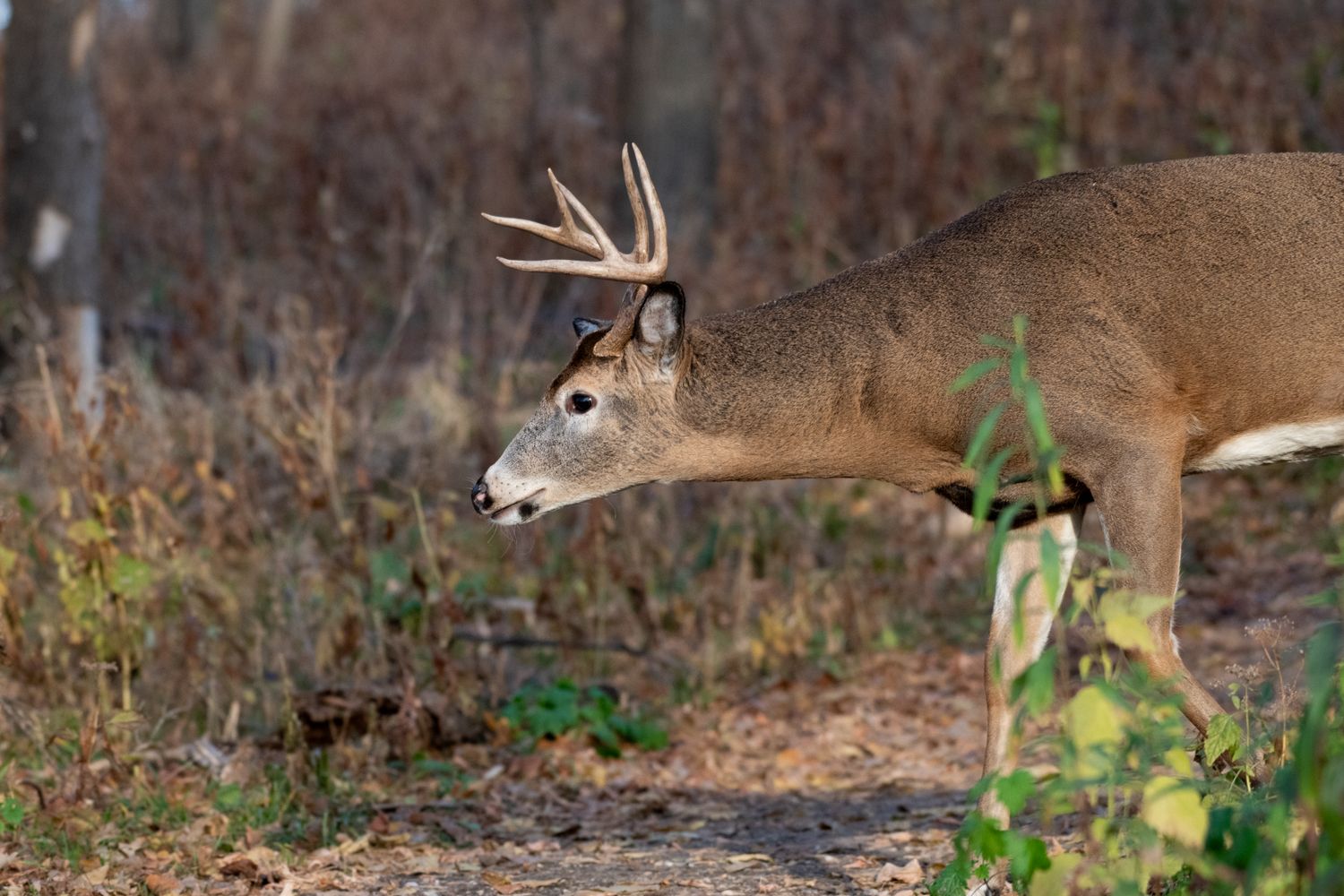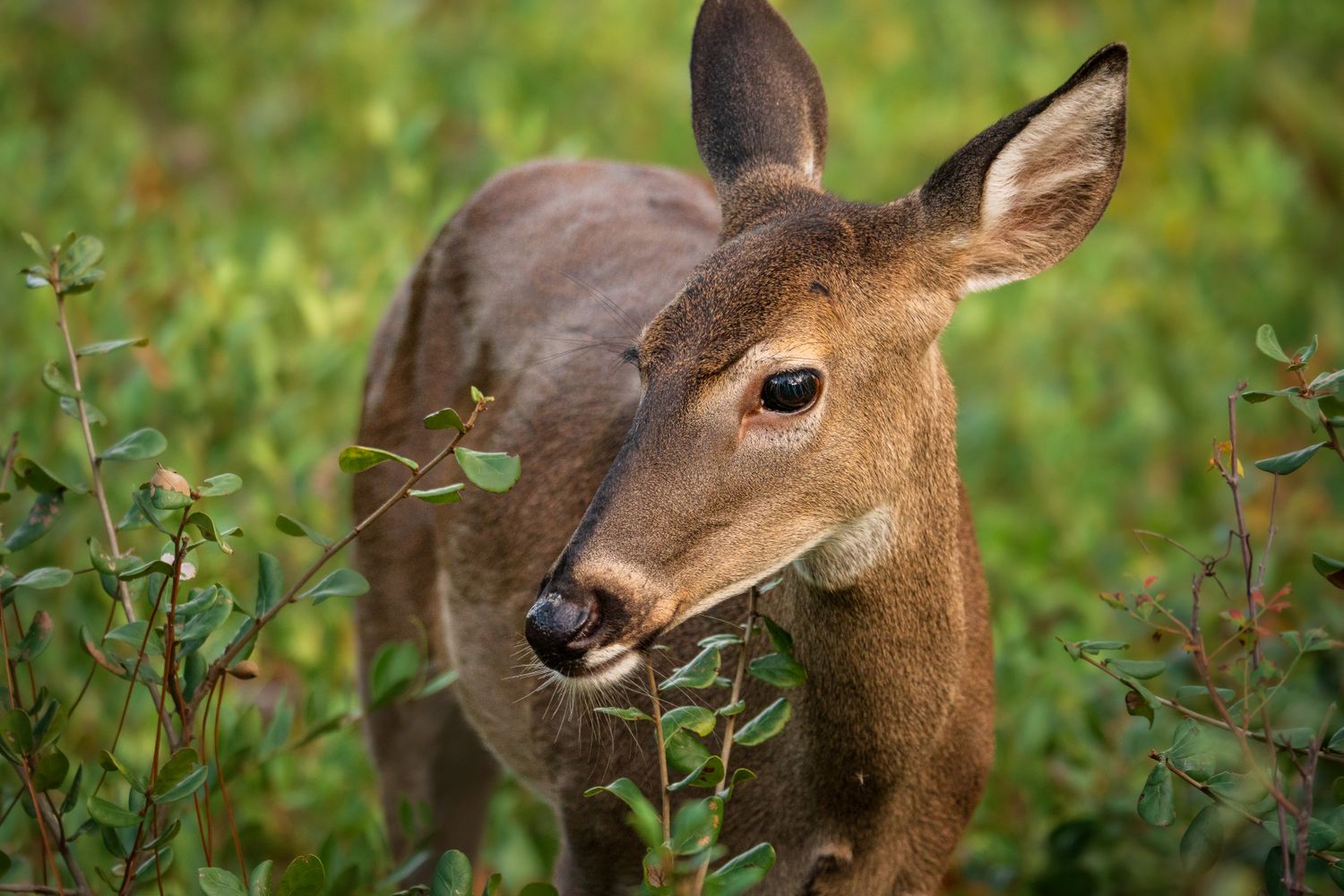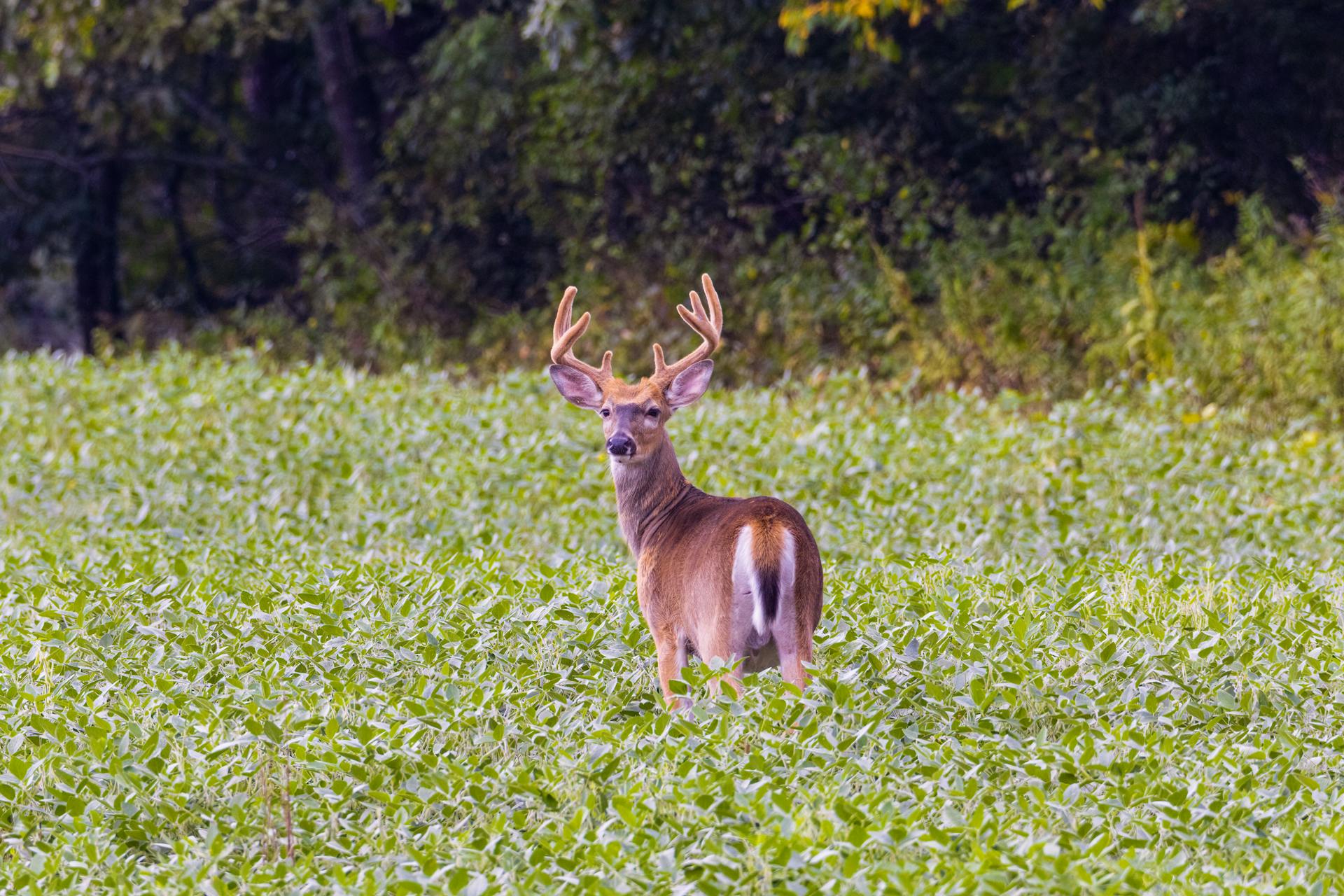
Virginia isn't just another hunting state—it's a destination. With over 200,000 deer harvested annually, a thriving black bear population expanding into new territory, and wild turkey numbers that rival any state in the nation, the Old Dominion offers some of the most diverse hunting opportunities on the East Coast.
For landowners, this translates directly to opportunity. Virginia's estimated 1.1 million deer put constant pressure on agricultural operations, and hunters are willing to pay for quality access. From the rolling farmland of the Piedmont to the rugged mountains of the Blue Ridge, private land owners are generating significant income while solving their deer management challenges.
For hunters, the math is simple: 51% of Virginia's deer management units are currently above population objectives. That means healthy deer numbers—but also intense competition for access. Securing a quality hunting lease means escaping crowded Wildlife Management Areas and building a relationship with land you can manage for years to come.
Whether you own property in Loudoun County's northern Virginia corridor, manage timber in the southwestern mountains, or hunt the Tidewater region's unique coastal habitat, this guide will help you understand the Virginia hunting lease market in 2025.
We'll cover:
Current hunting seasons and regulations specific to Virginia
Lease pricing benchmarks by region and county
The best counties for trophy whitetails, bears, and turkeys
CWD Disease Management Areas and associated regulations
Legal considerations unique to Virginia
How to structure and market your VA hunting lease
Sunday hunting laws and opportunities
Dog hunting traditions and regulations
Let's dive in.
Virginia Hunting Quick Facts
Before we get into pricing and specifics, here's what makes Virginia's hunting scene unique:
By the Numbers:
205,759 deer harvested in 2024-25 (4% above 10-year average)
101,238 antlered bucks taken in 2024-25
2,702 black bears harvested in 2024-25
Estimated 1.1 million deer statewide
51% of counties above deer population objectives
4 CWD Disease Management Areas covering portions of 24+ counties
109 CWD-positive deer detected in 2024-25 (state record)
62% of deer harvested during firearms season
52% of firearms-season deer taken with dogs (where legal)
What Hunters Pursue:
White-tailed deer (primary species, all regions)
Black bear (expanding population, now in nearly every county)
Wild turkey (spring and fall seasons)
Small game (squirrels, rabbits, grouse, quail)
Elk (limited lottery system in elk restoration zone)
Waterfowl (coastal areas and impoundments)
What Makes VA Special:
Dog Hunting Tradition: Virginia is one of the few states where hunting deer with dogs is legal in many eastern counties—a tradition dating back centuries
Sunday Hunting: Now legal statewide on private and public land with some restrictions
Diverse Terrain: From Chesapeake Bay marshes to 5,000+ foot mountain ridges
Extended Seasons: Urban archery seasons run from September through March in qualifying areas
No Antler Point Restrictions: Virginia doesn't require minimum point counts statewide (though some counties have antler restrictions)
Earn-A-Buck Counties: Several counties require harvesting an antlerless deer before taking a second buck
What Virginia Hunting Leases Cost in 2025
Let's cut to the chase: Virginia hunting leases average $10-25 per acre annually, with premium properties commanding $25-40+ per acre.
But that range is deceptively broad. Your specific property could be worth significantly more or less depending on:
Location (northern Virginia suburbs vs. southwestern mountains)
Proximity to major metro areas (DC/NoVA corridor, Richmond, Hampton Roads)
Deer population density (51% of counties are above objective)
Trophy potential (age class, genetics, habitat quality)
CWD status (properties in DMAs may see slight reduction in demand)
Dog hunting eligibility (eastern counties where legal)
Access and amenities (road access, existing blinds/stands, water, power)
Property size (larger properties often command lower per-acre rates but higher total lease value)
Quick Reference:
| Location Type | Average $/Acre | Premium $/Acre | Total Annual (100 acres) |
|---|---|---|---|
| Northern Virginia (Loudoun, Fauquier, Culpeper) | $25-40 | $40-50+ | $2,500-$4,000+ |
| Piedmont (Albemarle, Orange, Madison) | $18-30 | $30-40 | $1,800-$3,000 |
| Shenandoah Valley (Augusta, Rockingham, Frederick) | $15-25 | $25-35 | $1,500-$2,500 |
| Southside (Halifax, Pittsylvania, Charlotte) | $10-18 | $18-28 | $1,000-$1,800 |
| Tidewater (Suffolk, Isle of Wight, Southampton) | $12-22 | $22-32 | $1,200-$2,200 |
| Southwest Mountains (Tazewell, Wise, Buchanan) | $8-15 | $15-25 | $800-$1,500 |
| Central Virginia (Bedford, Campbell, Appomattox) | $12-20 | $20-30 | $1,200-$2,000 |
Important Note: These are general ranges based on marketplace data and hunter forums. Your specific property's value depends on its unique characteristics and local competition.
Regional and County-Specific Pricing Breakdown
Virginia's diverse geography creates distinct regional hunting markets. Let's break down what hunters are paying across the state:
Northern Virginia (Premium Metro Zone)
Counties: Arlington, Fairfax, Loudoun, Prince William, Fauquier, Culpeper
Average Range: $25-40 per acre Premium Properties: $40-50+ per acre
Why Higher:
Proximity to Washington DC and Northern Virginia's wealthy suburbs
Extremely limited land availability drives up prices
Excellent deer populations (both Loudoun and Fairfax are above population objectives)
Mix of horse farms, agricultural land, and hardwood forests
Urban archery opportunities extend seasons significantly
Trophy potential from older age class bucks on well-managed properties
Market Reality: Loudoun County sees some of the highest lease rates in Virginia despite CWD presence. Forum posts report $30-40/acre as standard for quality properties, with exceptional parcels near Middleburg or The Plains commanding $45-50/acre. Fauquier County similarly commands premium prices due to limited availability and proximity to wealthy hunt clubs.
CWD Note: Loudoun, Fauquier, Culpeper, and Prince William counties are in DMA2. This hasn't significantly dampened demand due to the premium location and limited alternatives.
Example: 80 acres in Fauquier County with mixed hardwoods, creek bottom, and pasture edge = $2,800-$3,600/year ($35-45/acre)
Piedmont Region (Quality Agriculture Zone)
Counties: Albemarle, Orange, Madison, Greene, Fluvanna, Louisa, Goochland
Average Range: $18-30 per acre Premium Properties: $30-40 per acre
Why Moderate-to-High:
Rolling agricultural landscape with excellent deer habitat
Proximity to Charlottesville and Richmond markets
Good mix of crop fields, hardwoods, and CRP land
Strong trophy potential with proper management
Some counties in CWD DMAs (Madison, Orange in DMA2)
Market Reality: Albemarle County sees strong demand from Charlottesville-area hunters, typically $20-30/acre. Orange County, despite CWD presence, still commands $18-28/acre due to excellent deer numbers. Madison County sees similar rates but slightly reduced demand due to DMA2 restrictions.
Example: 150 acres in Orange County with corn/soybean rotation and oak ridges = $3,000-$3,750/year ($20-25/acre)
Shenandoah Valley (CWD Management Zone)
Counties: Frederick, Clarke, Shenandoah, Warren, Rockingham, Augusta, Page
Average Range: $15-25 per acre Premium Properties: $25-35 per acre
Why Variable:
Most counties fall within CWD Disease Management Areas (DMA1 and DMA2)
Agricultural valley floor with excellent deer habitat
CWD restrictions (no natural urine attractants, mandatory testing days, feeding bans)
Strong historical hunting tradition
Mix of small farms and larger operations
Market Reality: Frederick County has the highest CWD prevalence in Virginia—about 25% of tested deer are positive. Despite this, demand remains steady at $15-25/acre because the deer population remains healthy. Augusta and Rockingham counties (with Rockingham newly added to DMA2 for 2025) see similar rates of $15-25/acre.
Clarke and Warren counties, while in DMA1, still produce quality bucks and command $18-28/acre for well-managed properties.
Example: 120 acres in Augusta County with orchard, hay fields, and hardwood ridge = $2,160-$2,640/year ($18-22/acre)
Southside Virginia (Value + Volume)
Counties: Halifax, Pittsylvania, Charlotte, Prince Edward, Mecklenburg, Brunswick, Lunenburg
Average Range: $10-18 per acre Premium Properties: $18-28 per acre
Why Lower (But Excellent Value):
Large agricultural operations with extensive acreage
Lower population density = less competition for leases
Excellent deer numbers (many counties above objective)
Strong dog hunting tradition in some areas
Less trophy management historically, but improving
Market Reality: Halifax and Pittsylvania counties offer some of the best values in Virginia. Properties of 200-500+ acres are common, and rates of $10-15/acre for good habitat are typical. Properties with exceptional food sources or proven trophy production can command $18-25/acre.
Charlotte, Prince Edward, and Mecklenburg counties see similar pricing, with excellent opportunities for hunters willing to do the work.
Example: 300 acres in Halifax County with mix of timber, fields, and creek bottom = $3,600-$4,500/year ($12-15/acre)
Tidewater Region (Unique Coastal Opportunity)
Counties: Suffolk, Isle of Wight, Southampton, Sussex, Greensville, Surry, Prince George
Average Range: $12-22 per acre Premium Properties: $22-32 per acre
Why Moderate:
Unique coastal plain habitat
Strong deer populations (40,000-50,000 deer harvested annually in Tidewater)
Dog hunting legal and popular
Mix of agricultural land, pine plantations, and swamp edges
Proximity to Hampton Roads metro area drives demand
Urban archery opportunities in some cities
Market Reality: Suffolk and Isle of Wight counties see steady demand at $15-25/acre due to proximity to Virginia Beach and Norfolk. Southampton and Sussex counties offer better values at $12-18/acre for larger tracts.
DWR is implementing Earn-A-Buck requirements in several Tidewater counties to manage high deer populations, which signals excellent deer numbers for hunters.
Example: 180 acres in Southampton County with pine/hardwood mix and agricultural edges = $2,520-$3,240/year ($14-18/acre)
Southwest Virginia (Mountain Value)
Counties: Tazewell, Wise, Buchanan, Dickenson, Lee, Russell, Scott, Washington
Average Range: $8-15 per acre Premium Properties: $15-25 per acre
Why Lower Per-Acre:
Large tracts of rugged mountain terrain
Lower deer density than eastern Virginia
Abundant National Forest and public land (reduces private land pressure)
Remote locations with challenging access
Buchanan County is still in population recovery mode
Why Trophy Hunters Love It:
Bucks that survive here grow OLD
Reduced hunting pressure produces mature deer
Bear opportunities are excellent
True wilderness hunting experience
Elk restoration zone nearby (lottery only)
Market Reality: Tazewell and Wise counties see $10-15/acre for quality properties. Buchanan County, where DWR is actively trying to increase deer numbers, sees lower rates of $8-12/acre. Lee, Russell, and Scott counties offer good values at $10-18/acre.
CWD Note: Tazewell County is in DMA4 after a positive detection in 2023.
Example: 250 acres in Tazewell County bordering National Forest = $2,500-$3,250/year ($10-13/acre)
Central Virginia (Balanced Opportunity)
Counties: Bedford, Campbell, Appomattox, Buckingham, Amherst, Nelson
Average Range: $12-20 per acre Premium Properties: $20-30 per acre
Why Solid:
Good balance of deer population and trophy potential
Mix of piedmont and mountain habitat
Bedford County has highest harvest intensity per square mile in Virginia
Strong agricultural base with food sources
Extended firearms seasons now available in several counties
Market Reality: Bedford County, despite having the highest deer harvest per square mile, still sees properties above population objective. Rates of $15-25/acre are typical for quality habitat. Campbell and Appomattox counties see similar pricing.
Amherst and Nelson counties, with more mountainous terrain, command slightly lower rates of $12-18/acre.
Example: 140 acres in Bedford County with active timber management and food plots = $2,520-$3,220/year ($18-23/acre)
The Best Virginia Counties for Hunting
Not all VA counties are created equal. Here's where the serious hunting happens:
For Trophy Whitetails:
Tier 1 (Proven Trophy Producers):
- Loudoun County - Suburban deer pressure produces giants, limited hunting access
- Fauquier County - Horse country with excellent age class and genetics
- Bedford County - Highest harvest intensity, but still above objective with quality bucks
- Albemarle County - Strong QDM tradition, excellent trophy potential
- Augusta County - Valley agriculture with mature buck production
Tier 2 (Emerging Trophy Areas):
- Orange County - Piedmont farmland, improving age structure
- Halifax County - Large tracts allow bucks to mature
- Rockingham County - Valley agriculture, newly in DMA2
- Charlotte County - Improving management, quality genetics
- Isle of Wight County - Tidewater trophy potential
Tier 3 (High Volume + Opportunity):
- Pittsylvania County - Large acreage, improving trophy production
- Southampton County - High deer density, coastal plain habitat
- Campbell County - Central Virginia quality
- Accomack County - Eastern Shore unique opportunity
- Franklin County - Southwest improvement zone
For High Deer Densities (Volume Hunting):
According to DWR data, counties with the highest harvest intensity (deer per square mile of habitat) include:
Top 10 by Harvest Intensity:
- Bedford County
- Loudoun County
- Fauquier County
- Albemarle County
- Culpeper County
- Augusta County
- Rockingham County
- Orange County
- Madison County
- Frederick County
Note: Both Bedford and Loudoun are still well above population objectives despite high harvest intensity.
For Black Bear:
Virginia's bear population has expanded dramatically. Top counties include:
Traditional Bear Counties (Western Mountains):
Augusta County - Consistent producer
Rockingham County - Valley edge meets mountains
Bath County - Remote mountain habitat
Highland County - Virginia's "Little Switzerland"
Giles County - New River Valley bear central
Emerging Bear Areas:
Bear are now found in nearly every Virginia county. Eastern counties seeing increased bear activity include Henrico, Hanover, and even portions of Tidewater.
For Wild Turkey:
Virginia is turkey heaven. Top counties for spring gobbler hunting:
Augusta County - Valley agriculture meets mountain roosts
Rockingham County - Similar habitat diversity
Halifax County - Southside pine/hardwood mix
Bedford County - Central Virginia quality
Frederick County - Northern Valley producer
Virginia Hunting Seasons and Regulations 2025-26
Understanding VA's hunting regulations is critical for both landowners and hunters. Here's what you need to know:
Deer Seasons 2025-26:
Urban Archery Season:
Early: September 6 - October 3, 2025
Late: January 4 - March 29, 2026
Antlerless only in designated cities and towns
Early Archery Season (Statewide):
Dates: October 4 - November 14, 2025
Either-sex on designated days
Early Muzzleloader Season:
West of Blue Ridge: November 1 - November 14, 2025
East of Blue Ridge: November 8 - November 14, 2025 (varies by county)
General Firearms Season:
West of Blue Ridge: November 15 - December 6-13, 2025 (varies by county, now 4-7 weeks)
East of Blue Ridge: November 15, 2025 - January 3, 2026
Late Archery Season:
November 30/December 14, 2025 - January 3, 2026 (varies by county)
Late Muzzleloader Season:
December 13, 2025 - January 3, 2026 (select areas)
Youth/Apprentice Weekend:
September 27-28, 2025
Key 2025-26 Changes:
Firearms season extended to 4 weeks in 20 western counties; several now have 7-week seasons
Either-sex days increased in 30 counties
Earn-A-Buck established in Chesterfield, Craig, Giles, and Spotsylvania counties
Rockingham County added to CWD Disease Management Area 2
Mandatory CWD testing November 15, 2025 in Patrick, Roanoke, Shenandoah, Smyth, Tazewell, and Wythe counties
Bag Limits:
East of Blue Ridge:
Two antlered deer per license year (on private land, no limit on antlerless with bonus permits)
West of Blue Ridge:
Two antlered deer per license year (additional restrictions in some counties)
One deer per day on public land
Special Regulations:
In Alleghany, Bath, Highland, or Rockbridge counties: If taking two bucks, at least one must have 4+ points on one side
Earn-A-Buck counties require harvesting antlerless deer before taking second buck
Turkey Seasons:
Spring Gobbler:
Dates: April 11 - May 16, 2026 (varies by area)
Bag Limit: 3 bearded turkeys per spring season (no more than 2 per day)
Fall Turkey:
Dates: October 25, 2025 - January 24, 2026 (varies by county)
Bag Limit: 1 turkey (either sex)
Bear Seasons:
Early Three-Day Season: November 8-10, 2025 (select counties)
Archery: Concurrent with deer archery season
Muzzleloader: November 1-14, 2025
General Firearms: November 22, 2025 - January 4, 2026 (varies by county)
Chronic Wasting Disease (CWD) in Virginia: What You Need to Know
CWD is a growing reality in Virginia, and it affects both hunting leases and how hunters approach properties in affected areas.
What is CWD?
Chronic Wasting Disease is a fatal neurological disease affecting deer, elk, and moose caused by an abnormal protein (prion). First detected in Virginia in 2009 in Frederick County, it has now spread to 17 counties with 109 positive detections in 2024-25—a state record.
Current CWD Disease Management Areas (DMAs) 2025-26:
DMA1 (Northern Shenandoah Valley - Epicenter):
Counties: Clarke, Frederick, Shenandoah, Warren
Notes: Original containment area, highest prevalence (25% positive rate in Frederick County)
DMA2 (Northern Virginia/Piedmont):
Counties: Arlington, Culpeper, Fairfax, Fauquier, Loudoun, Madison, Orange, Page, Prince William, Rappahannock, Rockingham (NEW for 2025)
Notes: Largest DMA, prevalence remains low in most counties
DMA3 (Southwest Virginia):
Counties: Carroll, Floyd, Franklin, Montgomery, Patrick, Pulaski, Roanoke, Wythe
Notes: First detection in Montgomery County in 2021; Roanoke County had first positive in 2025
DMA4 (Far Southwest):
Counties: Bland, Smyth, Tazewell
Notes: Created after Tazewell detection in 2023; no new positives in 2024
Rules Within Disease Management Areas:
If your property is in a DMA, hunters must follow these regulations:
PROHIBITED:
❌ Using or possessing natural deer urine-based attractants (STATEWIDE ban)
❌ Feeding deer (within 25 miles of any CWD detection, year-round)
❌ Removing high-risk parts (head, spine, brain tissue) outside DMA boundaries
❌ Rehabilitating deer from within DMAs
REQUIRED:
✅ Mandatory CWD testing on November 15, 2025 in Patrick, Roanoke, Shenandoah, Smyth, Tazewell, and Wythe counties
✅ Voluntary testing encouraged at refrigerator drop-off stations throughout season
✅ Proper disposal of carcass remains
Free CWD Testing:
Virginia offers free voluntary CWD testing statewide:
Drop off deer head with 3-4 inches of neck at designated refrigerator stations
Stations are available throughout DMAs and at cooperating taxidermists statewide
Results typically available within 2-3 weeks
Replacement tags available if deer tests positive
How CWD Affects Lease Pricing:
Reality Check: Properties in DMAs typically see a 5-15% reduction in demand or pricing compared to similar properties outside DMAs. However:
Mitigating Factors:
Free testing gives hunters peace of mind
CDC has no evidence of human CWD infection
Deer populations remain healthy in most DMA areas
Trophy potential often unaffected by CWD presence
Northern Virginia DMAs still command premium prices due to location
Marketing Tip: Be transparent about CWD status. Emphasize:
Free testing availability
Your property's compliance with DWR regulations
Continued strong deer populations
Proximity to voluntary testing stations
Sunday Hunting in Virginia: What's Allowed in 2025-26
Virginia has significantly expanded Sunday hunting in recent years, making it one of the more permissive mid-Atlantic states.
Sunday Hunting: What's Legal
Private Land:
Sunday hunting is now legal on private land statewide with landowner permission
No special written permission required beyond standard hunting permission
Public Land:
Sunday hunting is legal on most public lands including National Forests and WMAs
Some restrictions may apply to specific properties
Key Restrictions:
❌ Cannot hunt within 200 yards of any place of worship or accessory structure
❌ Cannot hunt deer or bear with dogs using firearms on Sunday (tracking wounded animals with dogs on lead is permitted)
Where Sunday Hunting is Prohibited:
Within 200 yards of houses of worship (statewide)
Specific public areas may have additional restrictions
What This Means for Leases:
Landowner Consideration: Sunday hunting is now a standard expectation for most Virginia leases. Properties that explicitly allow Sunday hunting are in line with market norms.
Pricing Impact: Unlike neighboring states with Sunday restrictions, Virginia properties don't command a premium specifically for Sunday hunting since it's widely permitted.
Include in Lease Agreement: Clarify that Sunday hunting is permitted subject to state regulations (200-yard restriction from churches).
Dog Hunting in Virginia: A Unique Tradition
Virginia is one of the few states where hunting deer with dogs remains legal—a tradition dating back centuries that significantly impacts the hunting lease market.
Where Dog Hunting is Legal:
Dog hunting for deer is permitted in much of eastern Virginia, generally east of the Blue Ridge Mountains. In counties where dogs are legal:
52% of firearms-season deer were harvested with dogs in 2024-25
Dog hunters accounted for 36% of total deer kill across all seasons
Key Regulations:
Dogs must wear collar tags with owner's name and phone number
Dogs cannot be used to hunt deer on Sundays with firearms
Right-to-retrieve laws allow hunters to go onto other property (with restrictions) to recover dogs
Some counties have additional local restrictions
Impact on Lease Pricing:
For Landowners:
Properties in dog-hunting counties may see different hunter demographics
Some hunters specifically seek dog-hunting opportunities
Other hunters prefer properties where dog hunting is not permitted
Lease Agreement Considerations:
Explicitly state whether dog hunting is permitted on your property
Consider liability implications of dogs crossing property lines
Address right-to-retrieve issues in your agreement
Legal Requirements for Virginia Hunting Leases
Virginia provides landowner protections, but proper lease structure is critical.
Virginia Recreational Use Statute
Key Protection: Virginia Code Section 29.1-509 limits landowner liability for recreational use:
Landowners who allow recreational access are exempt from liability for injury or damages, provided:
No charge is made for access (reduces protection when leasing for fee)
No gross negligence or willful failure to warn of dangerous conditions
Important Note: Once you charge a fee (like a lease payment), liability protections are reduced. This is why insurance is essential.
Liability Insurance: Essential for Leases
Short Answer: Yes, strongly recommended for hunting leases.
Options:
Farm/ranch liability insurance (if you have agricultural operations)
Hunting lease liability policy (~$300-$600/year)
Umbrella policy (additional coverage beyond homeowner's)
Require hunters to carry their own liability insurance (and name you as additional insured)
Typical Coverage Needed: $1-2 million minimum
Written Lease Agreement: Essential Elements
Never operate on a handshake. A written hunting lease agreement should include:
1. Parties & Property Description:
Landowner name and contact
Hunter/lessee name(s) and contact
Legal property description (county, parcel number, boundaries)
Map or plat attached
2. Term:
Start and end dates (typically July 1 - June 30 or September 1 - August 31)
Renewal terms and notice requirements
3. Payment:
Total lease amount
Payment schedule (upfront, installments)
Late payment penalties
Security deposit (if applicable)
4. Permitted Activities:
Specific species allowed (deer, turkey, bear, etc.)
Seasons allowed (archery only vs. all seasons)
Sunday hunting (subject to state restrictions)
Dog hunting (allowed or prohibited)
Number of hunters allowed
Guest policies
5. Prohibited Activities:
ATV use restrictions
No permanent structures without permission
No subleasing
Fire restrictions
No natural urine attractants (now statewide ban)
Feeding restrictions (particularly near CWD areas)
6. Access and Entry:
Designated access routes
Gate/lock protocols
Notice required for landowner to enter
Times of day access is permitted
7. Stands and Equipment:
Removable stands only (or permanent with approval)
No screw-in steps on trees (or specify acceptable methods)
All equipment must be removed by end of lease
Identifying tags required on all stands
8. Harvest and Reporting:
Hunter must follow all DWR regulations
Electronic game check requirements
CWD testing participation (if in DMA)
Sharing harvest information with landowner
9. Liability and Insurance:
Liability waiver (hunter assumes risk)
Hunter required to carry hunting license and insurance
Hold harmless clause
Landowner not responsible for theft, injury, or property damage
10. Property Care:
Hunter agrees to leave property in same condition
Repair any damage caused
Close gates, respect crops/timber
Report trespassers or suspicious activity
11. Termination:
Grounds for immediate termination (violation of rules)
Notice requirements
Refund policy (if any)
12. Signatures:
Both parties sign and date
Witnesses (recommended)
Virginia-Specific Legal Considerations:
Posted Property:
Virginia recognizes purple paint marking
Purple marks must be 2" wide, 8" long, placed 3-6 feet from ground
Signs must be posted conspicuously at property entrances
Trespassing Penalties:
Class 3 misdemeanor for hunting on posted land without permission
Fines up to $500 for first offense
Right to Retrieve (Dog Hunting):
Virginia law allows hunters to enter property to retrieve dogs
This can create conflicts with lease holders
Address in your lease agreement
How to Price Your Virginia Property
Now that you understand the market, how do you determine what YOUR specific property is worth?
Step 1: Determine Your Base Rate by Location
Start with your region average from the pricing tables above:
Northern Virginia: $25-40/acre base
Shenandoah Valley: $15-25/acre base
Southside: $10-18/acre base
Step 2: Adjust for Property Characteristics
Add Value For (+$2-10/acre each):
✅ Mature timber with mast-producing trees (oak, hickory, beech)
✅ Mix of habitat types (woods, fields, water, edge)
✅ Established food plots or permission to plant
✅ Existing tree stands, blinds, or shooting houses
✅ Good road access + parking area
✅ Creek, pond, or other water source
✅ Low hunting pressure in surrounding area
✅ Recent trail camera evidence of mature bucks
✅ Turkey roost trees or bear sign
✅ Proximity to agricultural crops
✅ Cell service and reasonable drive time from metro areas
✅ Dog hunting permitted (in applicable counties)
Subtract Value For (-$2-8/acre each):
❌ Heavy public land immediately adjacent
❌ ATV traffic or other recreational conflicts
❌ Property in CWD DMA with restrictions
❌ Recent logging with no regeneration
❌ Steep or unsafe terrain
❌ No vehicle access (walk-in only)
❌ Documented HD (Hemorrhagic Disease) outbreaks
Step 3: Consider Size and Scale
Economies of Scale:
Under 50 acres: Often higher per-acre rates (premium for manageable parcels)
50-200 acres: Standard market rates
200-500 acres: Slightly lower per-acre but higher total revenue
500+ acres: Consider multiple leases or club arrangements
Step 4: Research Local Competition
Before setting your price:
Search HuntLease.co for similar properties in your county
Check HLRBO, Base Camp Leasing, and Hunting Lease Network
Ask neighboring landowners what they charge
Contact local hunting clubs about typical rates
Review Virginia hunting forums
Step 5: Factor in Your Goals
Price Higher If:
You want selective, serious hunters only
Property has exceptional trophy potential
You're in no rush to lease
Price Lower If:
Property needs active deer management (too many deer)
You want to fill the lease quickly
You're new to leasing and want experience
You value relationship over maximum revenue
Use HuntLease's Free Pricing Calculator
The fastest way to get an accurate estimate:
[Calculate Your VA Property Value - Free Tool]
Enter your county, property size, habitat types, CWD DMA status, and get an instant estimate based on current Virginia market data.
Marketing Your Virginia Hunting Lease
You've priced your property—now how do you find quality hunters?
1. List on HuntLease.co
Why It Works:
Virginia-specific search filters
Scouting tools show hunters your property's potential
Secure messaging and payment processing
Insurance verification system
Creating a Winning Listing:
Title Examples:
❌ "Hunting land for lease"
✅ "Premium 200-Acre Fauquier County Whitetail Property – Piedmont Agriculture Edge"
✅ "Secluded 350-Acre Halifax County Deer & Turkey Haven – Southside Value"
Description Must Include:
County and general location (don't give exact address publicly)
Total acreage and huntable acreage
Terrain and habitat types
Recent harvest history (if impressive)
Trail camera photos of mature bucks
Access details
What's allowed (deer, turkey, bear, dog hunting?)
CWD status and testing availability
Price and lease term
2. Target Regional Markets
Virginia draws hunters from:
DC Metro area (Northern Virginia properties)
Richmond metro (Central and Tidewater)
Hampton Roads (Tidewater and Southside)
North Carolina (Southside Virginia)
Maryland (Northern Virginia, Shenandoah Valley)
Marketing Angle: "Weekend Access – Just 90 Minutes from DC" or "Richmond Hunter's Paradise"
3. Screen Potential Hunters Carefully
Ask These Questions:
How many years have you been hunting?
What species are you primarily interested in?
How many hunters in your group?
Do you plan to use dogs (if applicable)?
Do you have hunting liability insurance?
Have you leased private land before?
Can you provide references?
Red Flags:
Unwilling to provide references
Pushy about getting address before lease is signed
Asks to sublease to friends
Doesn't respect CWD regulations
Frequently Asked Questions
For Landowners:
Q: Do I need a written contract for a hunting lease in Virginia? A: While not legally required, a written lease agreement is STRONGLY recommended. It protects both parties, establishes rules, and prevents disputes.
Q: Am I liable if a hunter gets hurt on my property? A: Virginia's Recreational Use statute provides some protection, but charging a fee reduces that protection. Carry hunting lease liability insurance ($1-2 million recommended) and have hunters sign waivers.
Q: What if my property is in a CWD Disease Management Area? A: Be transparent about it. Hunters understand CWD is a management issue. You may need to price slightly lower (5-15%) than similar properties outside DMAs, but emphasize free testing and that deer populations remain healthy.
Q: Should I allow dog hunting on my property? A: This is your decision based on your preferences, location (must be in dog-hunting county), and target hunter demographic. Some hunters specifically seek dog-hunting opportunities while others prefer properties without it.
Q: Can I lease property that's enrolled in land use taxation programs? A: Generally yes, but check your specific program requirements. Hunting leases may actually support your agricultural or forestry use designation.
For Hunters:
Q: What's a fair price for a Virginia hunting lease? A: It varies dramatically by region. Northern Virginia averages $25-40/acre. Southside averages $10-18/acre. Use the regional pricing tables and compare similar properties.
Q: Should I avoid leasing property in a CWD Disease Management Area? A: Not necessarily. DMAs have restrictions (no natural urine attractants statewide anyway), but offer free testing and often have less competition. Many DMA properties still produce quality bucks.
Q: Can I hunt on Sundays on leased property? A: Yes, Sunday hunting is legal on private land statewide with landowner permission, except within 200 yards of places of worship. You cannot hunt deer or bear with dogs using firearms on Sunday.
Q: Do I need liability insurance to lease hunting land in VA? A: Many landowners now require it. Sportsmen's liability insurance is available for $100-300/year through various organizations.
Q: How far in advance should I secure a lease? A: Start looking in May-July. Best properties lease quickly. Don't wait until September—you'll have limited options.
Conclusion: Your Virginia Hunting Lease Journey Starts Here
Virginia's hunting heritage runs deep, and for good reason. With over 200,000 deer harvested annually, expanding bear populations, world-class turkey hunting, and unique traditions like dog hunting, the Old Dominion offers something for every hunter.
For landowners, hunting leases represent genuine income opportunity. A 150-acre property in Fauquier County could generate $4,500-$6,000 annually. A 300-acre tract in Halifax County could bring $3,600-$5,400. That's real money that offsets property taxes, funds habitat improvements, or simply rewards you for owning land.
For hunters, a Virginia hunting lease means escaping crowded WMAs, hunting mature bucks on property you can manage, and building traditions that last generations.
Whether you're a Northern Virginia landowner with premium horse country property, a Southside timber owner sitting on untapped potential, or a DC-area hunter looking to secure quality access, the Virginia hunting lease market has opportunity.
Ready to get started?
For Landowners:
[Calculate Your Property Value - Free Tool]
See what hunters in your county are paying, then list your property on HuntLease.co to connect with serious, vetted hunters.
For Hunters:
[Browse Available VA Hunting Leases]
Search properties by county, filter by species and seasons, view scouting data, and secure your 2025-26 lease before the best properties are gone.
More Useful Links:
https://dwr.virginia.gov/hunting/regulations/deer/
https://dwr.virginia.gov/wildlife/diseases/cwd/
https://dwr.virginia.gov/hunting/sunday-hunting-faq/
https://dwr.virginia.gov/wildlife/deer/harvestsummary/
https://ahuntinglease.org/hunting-lease-insurance
Last Updated: December 2025
Disclaimer: This guide is for informational purposes only. Hunting regulations, CWD management areas, and lease laws may change. Always verify current regulations with the Virginia Department of Wildlife Resources (dwr.virginia.gov) and consult legal and insurance professionals for specific situations. Hunting lease prices are estimates based on marketplace analysis and should be used as general guidelines only.