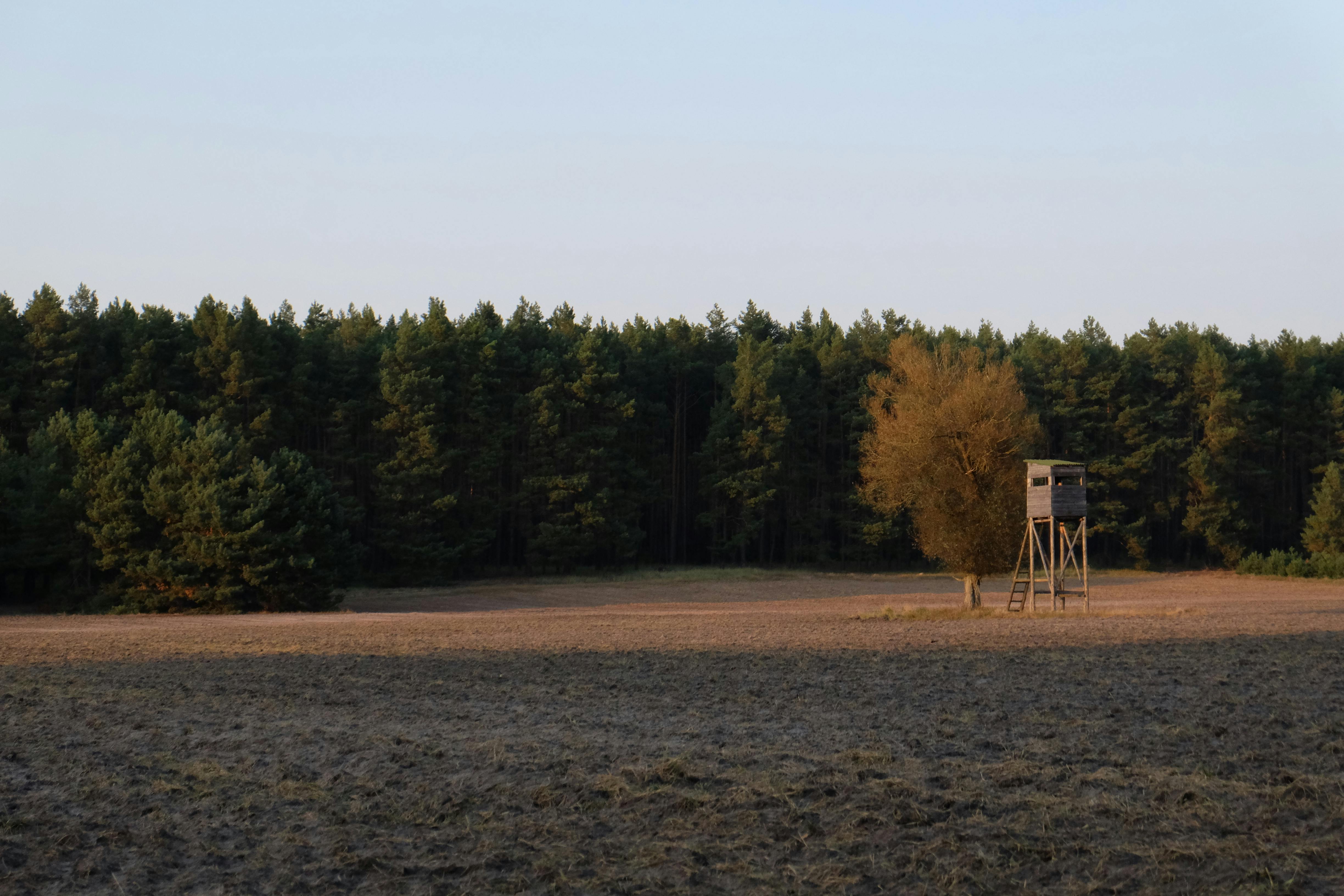
Most hunters looking for a lease start in the wrong place. They scroll classifieds, ask around at the co-op, and slowly conclude that every good piece of private ground is already spoken for by somebody's uncle.
Meanwhile, one timber company alone owns roughly 10.4 million acres of U.S. timberland — and a large share of it is leased to hunting clubs every single year, through a public, documented process that almost nobody explains.
Corporate hunting leases are the biggest pool of leasable ground in America and the least understood. This is the guide we wish existed: who actually owns the land, what it costs in 2026, how the application process really works, and — the part nobody tells you — when a corporate lease is the wrong call.
What a "Timber Company Hunting Lease" Actually Is
When people say timber company hunting lease, they usually mean a recreational lease issued directly by an industrial landowner: a timber REIT, a Timber Investment Management Organization (TIMO), or — in Appalachia — a coal and land holding company.
The structure is different from leasing 200 acres from a farmer:
- The landlord is a department, not a person. You are dealing with a recreational lease program with standardized contracts, published rules, and staff who administer thousands of leases. There is no negotiating the handshake terms over a tailgate.
- Timber management comes first, always. You are leasing recreational access to a working forest. Harvest, thinning, burning, spraying, and road work happen on the company's schedule, not around your season.
- Tracts are large and club-oriented. Many corporate tracts run 500 to several thousand acres, which is why the club model dominates — the per-acre rate is spread across members.
- Terms are rigid and non-transferable. Subleasing, commercial guiding, and selling hunting rights are typically prohibited outright.
That last point matters more than most hunters realize, and we come back to it below.
Who Actually Owns This Ground in 2026
The industrial timberland map changed meaningfully this year, so it is worth being current.
Timber REITs and TIMOs
- Weyerhaeuser — roughly 10.4 million acres owned in the U.S., plus long-term licenses on about 14 million acres in Canada. It runs the most formalized recreational lease and permit program in the country, concentrated in the South, Pacific Northwest, and Lake States.
- Rayonier / PotlatchDeltic — these two merged in an $8.2 billion all-stock "merger of equals" that closed January 30, 2026, creating a combined roughly 4.1-million-acre timberland owner. PotlatchDeltic alone brought about 2.1 million acres across Alabama, Arkansas, Georgia, Idaho, Louisiana, Mississippi, and South Carolina. If you leased from either company before 2026, expect program consolidation and re-papering over the next couple of renewal cycles.
- TIMOs — Molpus Woodlands Group, Resource Management Service, Campbell Global, and Manulife's forest arm manage millions of acres on behalf of pension funds and institutional investors. Most run recreational lease programs, often through a regional forester or a contracted lease administrator.
Appalachian Coal and Land Companies
In West Virginia, eastern Kentucky, and southwest Virginia, the big private landholders are frequently land companies whose original business was coal and minerals — outfits like Pocahontas Land and Berwind Land have historically held tens of thousands of acres apiece.
Their posture toward hunting is genuinely different from a timber REIT's, and it varies company by company:
- Some lease formally to organized hunting clubs, with contracts and annual fees.
- Some operate an informal open-door policy — hunting is tolerated, but the company will not issue written permission, largely for liability reasons.
- Some, particularly around active operations in counties like Logan and Mingo, are locked down entirely.
The critical trap in coal country: mineral rights, timber rights, and surface rights are often severed and held by different parties. Permission from the company that holds the mining lease is not permission from the surface owner. If your hunting rights do not trace back to whoever owns the surface, you do not have a lease — you have a misunderstanding waiting to become a trespass charge. Get the chain in writing. Our hunting lease agreement guide walks through the clauses that pin this down.
What Corporate Hunting Leases Cost in 2026
Corporate programs generally price per acre, per year. Rates track the regional market rather than undercutting it — the old assumption that timber company ground is automatically the cheap option is increasingly out of date. Weyerhaeuser, for instance, has pushed rates up roughly 10% in recent cycles with the stated aim of being more competitive with the open market, and clubs in south Arkansas have reported per-acre charges moving from around $8.00 to $10.25.
For a regional baseline, Forest Resource Consultants — a forestry consultancy that administers timberland lease programs — published these 2026 Southeastern annual per-acre benchmarks:
| State | Entry-level timberland | Managed / improved | Premium / exclusive |
|---|---|---|---|
| Georgia | $8–12 | $15–25 | $30–45+ |
| South Carolina | $7–12 | $14–22 | $28–40+ |
| Alabama | $6–10 | $12–20 | $25–38 |
| Mississippi | $6–10 | $12–18 | $22–35 |
| North Florida | $7–11 | $14–24 | $30–50+ |
Source: Forest Resource Consultants, Inc., 2026 Southeast timberland lease benchmarks. Annual per-acre rates, not day-use fees.
Two honest caveats. First, most raw industrial timberland sits in the entry-level column — you are usually paying $6–12 an acre, not premium money, because the tract is a working pine stand rather than a managed trophy property. Second, per-acre rate is not your real cost. Budget for club dues, liability insurance, gate keys, road maintenance assessments, food plot inputs, and fuel to a tract that may be two hours away.
Run your specific numbers through the HuntLease Lease Price Calculator before you sign so you know whether the asking rate is fair for your region and acreage.
How the Application Process Actually Works
This is the part that keeps hunters out — not price, but not knowing the mechanics. The large programs are more accessible than their reputation suggests.
1. Availability is published, not whispered
The major timber companies maintain searchable tract listings showing acreage, county, and asking rate. Tracts appear as leases expire or are surrendered. The turnover is real, but the good ground moves fast.
2. You submit a lease request, not a bid — usually
On Weyerhaeuser's program, you submit an online lease request; per the company's published lease FAQ, a contract is issued for acceptance within about three business days, and the contract must be accepted and paid in full before anyone hunts. Some regions and some companies instead use a sealed-bid or lottery system, particularly where demand badly outstrips supply.
3. Clubs designate a single point of contact
If a club takes the lease, one person is named as the club contact and speaks for the club in all company communication. Choose carefully — that person carries the renewal relationship, and in practice the relationship is what gets you first look next year.
4. Renewal beats application
Existing lessees in good standing usually get first crack at renewal. That is why tracts that hit the open list are often the ones somebody else just walked away from. Ask why it is available before you celebrate.
5. Permits are a separate, cheaper on-ramp
Several companies sell individual or small-group recreational access permits distinct from full leases — lower cost, far less exclusivity, and a legitimate way to get boots on company ground for a season while you wait for a lease to open.
The Honest Tradeoffs Nobody Puts in the Brochure
We are a hunting lease marketplace, so you would expect us to talk you out of corporate ground. We are not going to — for the right hunter it is an excellent deal. But go in clear-eyed.
Where corporate leases win
- Scale. You can lease more acres per dollar than almost anywhere else, which is the whole argument for the club model.
- Stability of process. Standard contracts, published rates, no landowner deciding in October that his son-in-law wants the place back.
- Genuine habitat diversity. Rotational harvest creates the clearcut edges, regeneration, and travel corridors whitetails actually use. A three-year-old cut is a deer factory.
- Road access. Logging road networks make big tracts huntable and haulable.
Where they hurt
- You do not control the timber. The stand you hung twelve sets in can be on the ground by opening weekend, with no notice owed to you and no rent abatement.
- Gates, closures, and shared use. Roads close for wet-weather protection or active operations. Some tracts carry concurrent permit holders or public access agreements.
- Little habitat latitude. Food plots, permanent stands, and improvements usually require approval and often are not allowed at all.
- Annual renewal risk. Rates reset, tracts get sold, programs get restructured — as the 2026 timber REIT consolidation is about to demonstrate to a lot of clubs.
- No subleasing, ever. If your club loses three members in March, you eat the shortfall. You cannot legally sell the extra spots to strangers.
That final constraint is the single most common way hunters accidentally breach a corporate lease. Before you sign anything, run it against our checklist of hunting lease red flags, and make sure your club carries its own liability coverage — the company's insurance is not protecting you.
Scouting a Big Timber Tract Is a Different Skill
A thousand acres of even-aged pine will beat a hunter who is used to a 60-acre farm. The land has few natural funnels, the deer sign is diffuse, and the productive cover moves every year as stands are cut and replanted.
Work the edges and the age classes: the seam between a two-to-five-year-old cut and mature timber, hardwood drains cutting through pine, and the gated roads themselves. Then let cameras do the pattern work over that much ground — see our roundup of the best trail cameras and cellular scouting tech, and map the tract before you burn a weekend walking it with HuntLease Scouting.
Corporate Lease or Private Lease? A Straight Answer
Go corporate if you have an organized club of four or more, you want acreage over intimacy, you can absorb a surprise clearcut without it ruining your year, and you are comfortable with a landlord that will never bend a rule for you.
Go private if you are hunting solo or with one partner, you want to plant plots and build permanent stands, you want a relationship you can renegotiate, or you want any say at all in what happens to the timber.
Most hunters we talk to end up wanting the private lease and settling for corporate acreage because they could not find the private one. That is a search problem, not a market problem — browse current hunting lease listings before you assume nothing is out there.
And if you are the landowner in this story: the industrial programs are your pricing comparison, not your competition. See how your tract stacks up on the HuntLease landowner side.
Frequently Asked Questions
How much do timber company hunting leases cost in Alabama?
Most industrial timberland in Alabama leases in the range of $6–10 per acre per year for entry-level tracts, rising to roughly $12–20 for actively managed ground and $25–38 for premium tracts, per 2026 Southeastern benchmarks. Company programs generally price to the regional market. Our Alabama hunting lease price guide breaks this down by county.
Can you lease hunting land from a coal company in West Virginia?
Sometimes. Practice varies widely: some Appalachian land companies lease formally to established clubs, some tolerate hunting without issuing written permission because of liability exposure, and some prohibit it outright. Because mineral, timber, and surface rights are frequently severed in coal country, confirm that whoever grants you permission actually controls the surface. Start with our West Virginia hunting lease guide.
How do I find timber company hunting leases near me?
Check the major landowners' published tract listings for your county, then contact the regional forester or lease administrator directly and ask to be notified when tracts open. Availability is seasonal and heavily renewal-driven. In parallel, search private leases in your state through HuntLease listings, since the two markets rarely overlap.
Are timber company leases cheaper than private leases?
Often on a per-acre basis, but not always on total cost, and the discount has narrowed. You typically get more acres for the money and less control, plus real costs — club dues, insurance, road upkeep, travel — that a small private lease down the road may not carry.
Can I sublease or sell spots on a corporate lease?
Almost never. Subleasing, commercial hunting, and selling hunting rights are standard prohibitions in corporate recreational lease contracts, and violating them is grounds for immediate termination without refund.
What happens if they log my lease mid-season?
Generally, the harvest proceeds and you have no claim. Recreational leases are subordinate to timber operations by design. Ask, before signing, what is scheduled for harvest during your lease term — reputable programs will tell you.
The Bottom Line
Corporate timberland is the largest and most overlooked source of huntable private acreage in the country, and the application process is far more open than its reputation suggests. It is also the least forgiving landlord you will ever have: no habitat control, no sublease flexibility, and a chainsaw that answers to a harvest schedule instead of your season.
Know which trade you are making before you write the check.
Pricing a tract — corporate or private? Run it through the HuntLease Lease Price Calculator to see what the acreage should actually cost in your region, then browse open leases near you.