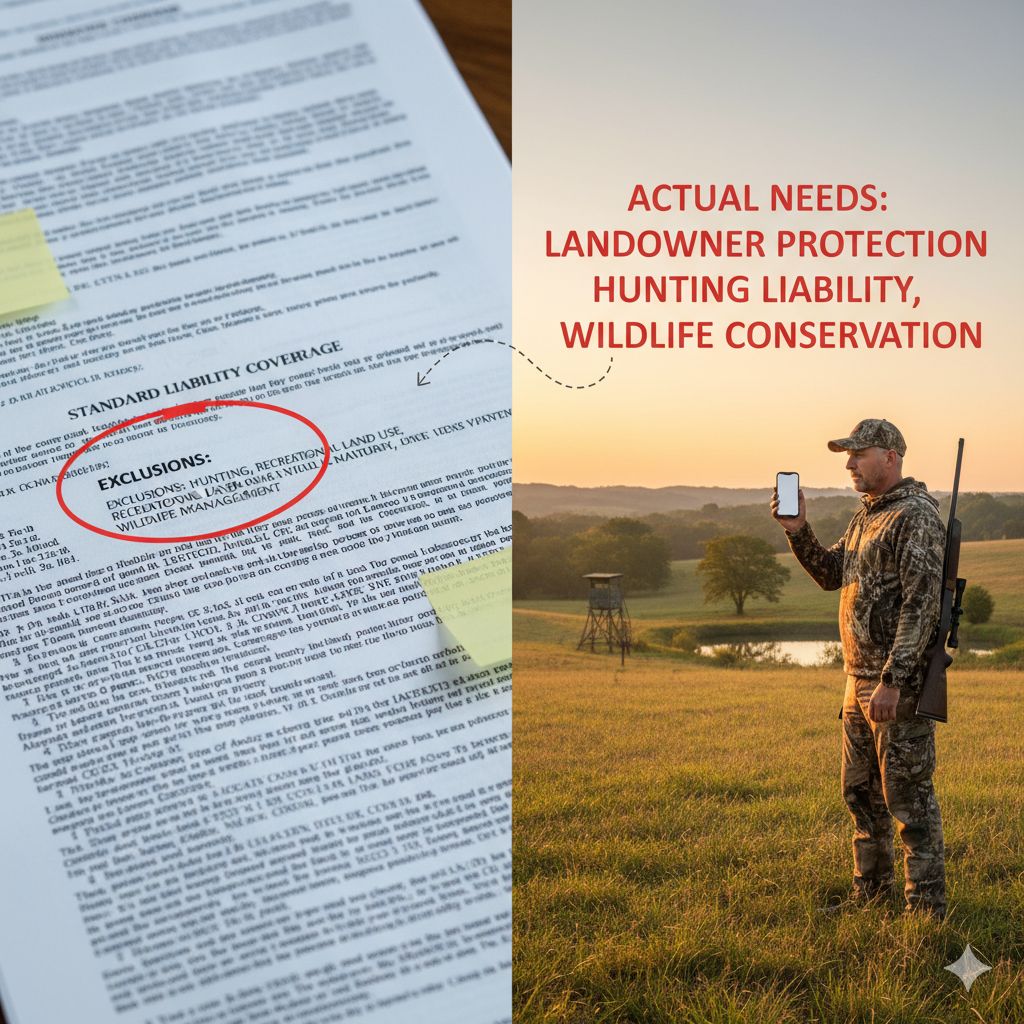
You leased your land to one hunter — shook hands, signed the contract, collected the check. Three months later, there are strangers you've never met setting up stands on your back ridge. Sound familiar?
Unauthorized subletting is more common than most landowners realize, and it creates three real problems: unvetted people on your property, a gap in your liability coverage, and a lease that may be hard to terminate cleanly. The fix lives in a single clause that every hunting lease agreement should have — the no-transfer clause — and in knowing exactly how to enforce it.
What Subletting Looks Like on a Hunting Lease
Hunters rarely think of what they're doing as "subletting." It shows up as:
- A lessee who charges two or three buddies to split the lease with him, pocketing money without telling you.
- A hunter who lets a cousin use the property while he's out of town.
- A small hunting club that signs under one member's name, then spreads access across the full membership.
In each case, the person you vetted and signed with has handed your land to someone you know nothing about. That matters a lot when liability is on the line.
Why It's a Problem Beyond Just the Rules
When an unauthorized hunter is injured on your property, your recreational use statute protection — which shields landowners from negligence suits in most states — may not extend to guests you never authorized. Worse, some farm insurance policies have language that limits coverage to "named permittees." A stranger brought in through an informal sublet almost certainly isn't named anywhere.
Read more on the liability side: Am I Liable if a Hunter Gets Hurt on My Land? and Hunting Lease Insurance Guide for Landowners.
What the No-Transfer Clause Should Say
A solid no-transfer clause does three things in plain language:
- Prohibits assignment and subletting outright. "Lessee shall not assign, sublet, or transfer any rights under this Agreement to any third party without the prior written consent of Landowner."
- Defines "guest" limits clearly. Specify how many guests the lessee may bring in a season, require guests to sign a liability release before entering, and cap day-hunt frequency if you want to.
- Names the remedy. State explicitly that a violation gives you the right to terminate the lease immediately and forfeit the deposit — no cure period, no negotiation.
If your current contract is vague on any of these points, the HuntLease sample lease agreement includes a tested no-transfer clause you can adapt. For landowners listing or re-listing after a bad experience, the HuntLease landowner onboarding guide walks through what to look for before you sign with the next tenant.
How to Enforce It When a Violation Happens
- Document first. Photograph or record the unauthorized individuals on your property (gate camera, trail camera, or personal observation). Note the date and time.
- Issue written notice. Send a certified letter or email (whichever your contract designates for notices) citing the specific clause number and describing what you observed. Keep a copy.
- Invoke the termination clause. If your contract allows immediate termination, state that the lease is terminated as of the notice date. If it requires a cure period, set the deadline explicitly.
- Withhold or forfeit the deposit per contract terms. Most well-drafted leases allow deposit forfeiture on a material breach — subletting qualifies.
- Document the return of access. Retrieve any gate codes or physical keys in writing. Change codes immediately.
Frequently Asked Questions
Can I keep the security deposit if I catch subletting?
Yes, if your contract designates unauthorized subletting as a material breach and allows deposit forfeiture as a remedy. Without that language, you're negotiating, not enforcing — which is why the clause wording matters.
What if the lessee says they were just bringing "guests," not charging anyone?
If your contract limits guest numbers or requires prior written approval, a violation is a violation regardless of whether money changed hands. The key is that you didn't authorize those individuals, and they weren't on the original agreement.
Does subletting void my recreational use statute protection?
It depends on your state's statute and whether the unauthorized guests paid to be there. In states where the recreational use statute requires that access be granted "without charge," a subletting arrangement where guests paid the lessee could strip your protection entirely. Consult your state's DNR legal resources or an attorney for a state-specific answer.
Don't Wait for a Problem to Review Your Lease
The time to tighten your no-transfer language is before season opens — not after you find a stranger's truck on your property. If you're evaluating your land's lease value at the same time, run the numbers through the HuntLease Lease Price Calculator to make sure you're charging a rate that attracts the right type of hunter. Better tenants, clear contracts, and the right pricing all work together.
Ready to find serious hunters for your property? Browse current listings or list your land on HuntLease today.