Disclosure: HuntLease is a participant in the Amazon Associates Program. We may earn a commission on qualifying purchases made through links on this page — at no extra cost to you.
Here is the contrarian truth most calling articles will not tell you: the call in your pack matters far less than when and where you use it. A public-land hunter blind-calling into pressured timber is mostly gambling. But if you hold a lease, you already know which buck lives in that bottom, where he beds, and which scrape line he works. That intel is what turns a $10 grunt tube into a filled tag.
So before you buy anything, understand this: deer calling is a high-reward, high-risk tool. Used with restraint on ground you have scouted, it pulls a hung-up buck those last 40 yards. Used carelessly, it clears the woods. This guide covers the four sounds that actually work on whitetails, the calendar that tells you when to use each one, and six calls we would carry into the 2026 season — every one verified in stock with a 4.0-star-plus rating and hundreds of real reviews.
The Four Sounds Every Whitetail Hunter Should Master
You do not need a vest full of calls. You need to make four sounds convincingly, and you need to know what each one says to a deer.
1. The grunt
The grunt is the workhorse — a buck's everyday vocabulary. A short, soft "tending grunt" says a buck is following a doe. A deeper, drawn-out grunt signals a bigger, more dominant animal. Early in the year, keep it light and social. As the rut ramps up, a more aggressive grunt can turn a cruising buck on a string. If you own one deer call, make it a grunt call or an adjustable grunt tube.
2. The doe bleat
A bleat is a doe's contact call, and the estrus bleat — that long, nasal "blaaat" — tells every buck in earshot that a receptive doe is nearby during the rut. Bleats are non-threatening, which makes them deadly on wary mature bucks that will not answer aggressive grunting. A "can" style bleat call that you simply tip over is the easiest call in hunting to use well.
3. The snort-wheeze
This is the sound of an agitated, dominant buck — a sharp "fft-fft-fffffft." It is a challenge, and it is a gamble. During the pre-rut and rut, a snort-wheeze can enrage a mature buck into closing the distance to run off a rival. It can also scare a subordinate buck out of the county. Save it for the deer you know is a shooter and the moment he starts to walk away.
4. Rattling
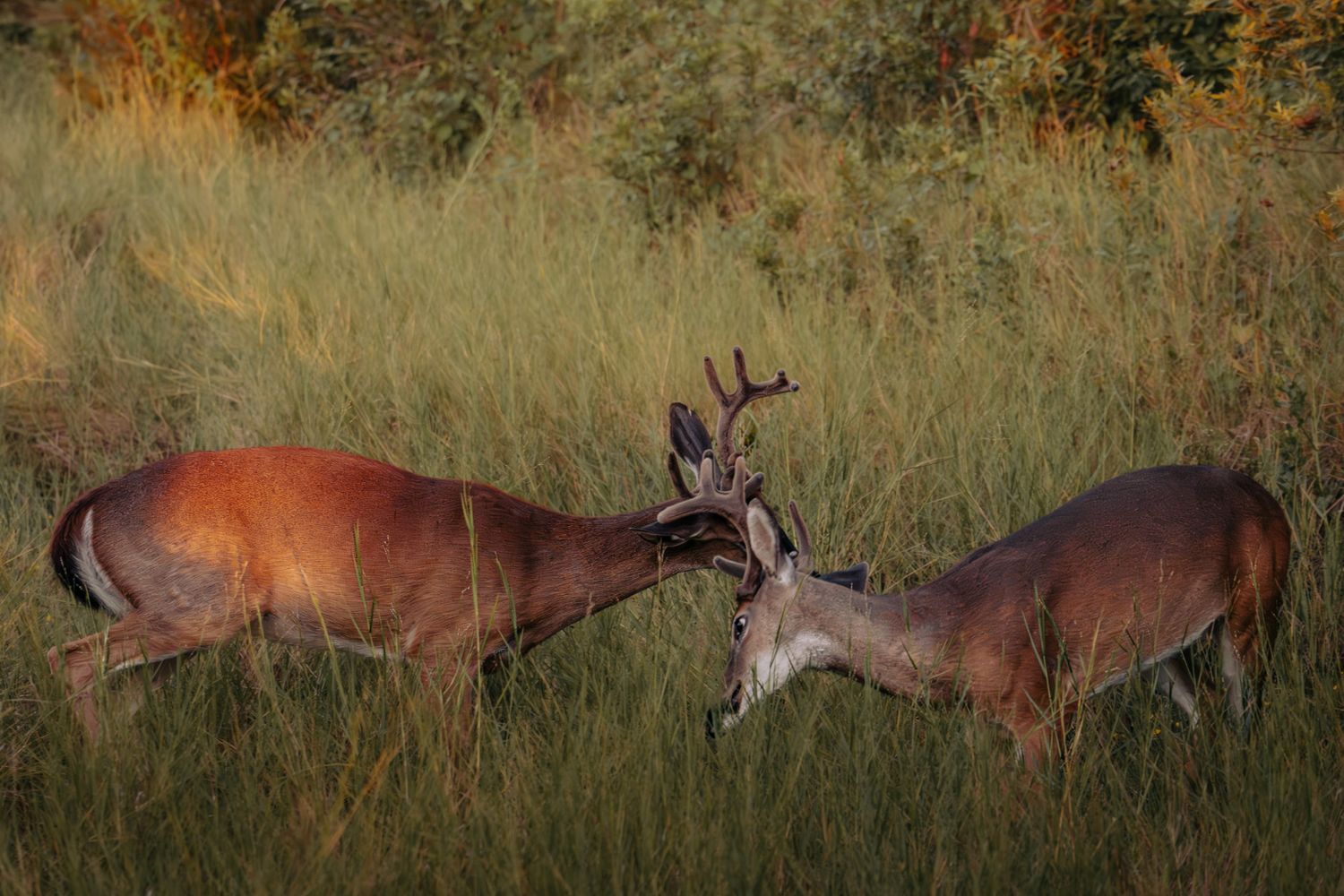
Rattling mimics two bucks fighting over a doe, and nothing pulls a rut-crazed buck faster when the timing is right. The peak window is the pre-rut and the days bracketing peak breeding, when bucks are on their feet and competitive. Rattling is loudest and riskiest of all — on a lease with a good buck-to-doe ratio and mature bucks, it is one of the most exciting tactics in the woods.
When to Call: A Rut-Season Calendar
Timing separates hunters who call deer in from hunters who call deer away. Match the sound to the phase. If you want the full breakdown of buck behavior week by week, our pre-rut, peak-rut, post-rut game plan lays out the whole six-week arc.
- Early season (opener to late October): Bucks are in bachelor-group mode and social. Call sparingly — a few soft grunts or bleats to a deer that is nearly in range. This is not the time for rattling or snort-wheezes.
- Pre-rut (late October into early November): The best rattling window of the year. Bucks are cruising, checking scrapes, and testing rivals but does are not yet fully receptive, so competition is fierce. Aggressive grunting, rattling sequences, and the occasional snort-wheeze all shine now.
- Peak rut (mid-November in most of the whitetail range): Bucks are locked down with does. Estrus bleats and tending grunts can pull a lone cruising buck, but many mature deer are preoccupied. Blind-calling produces fewer responses — hunt the does.
- Post-rut (late November into December): A second, quieter window. Grunting and bleating to still-cruising bucks can work, and a late-season food source plus a soft call is a good combination.
Whatever the phase, calling works best when you have already done the homework. Knowing where a buck beds and travels — the kind of intel you build from summer through fall — is what lets you set up in the right spot and call at the right moment. Our guides on reading deer sign and patterning a mature buck pair naturally with a call in your pocket, and the HuntLease Scouting maps help you mark bedding, scrapes, and setups before you ever climb in.
6 Deer Calls We Would Carry in 2026
We built this list around versatility and proof: a call for each core sound, all priced from under $10 to about $25, and none of the boutique gimmicks. Every product below was verified in stock with a 4.0-star-or-better rating and at least 100 reviews at the time of writing.
1. Illusion Systems Extinguisher — Best All-in-One Grunt Tube
If you buy one call, buy an adjustable grunt tube. The Illusion Systems Extinguisher is the most reviewed deer call on this list for a reason — it produces buck grunts, doe and fawn bleats, and even a snort-wheeze from a single freeze-resistant tube, and its adjustable design lets you dial from a young buck to a mature bruiser. For a hunter who wants to master all four sounds without carrying four calls, this is the value pick of the year. (4.6 stars, 11,700-plus reviews.)
2. Primos The Great Big Can — Best Doe Bleat
Nothing is simpler and few things are deadlier during the rut. The Primos Great Big Can makes a realistic estrus bleat with a single tip of the wrist — no reeds to learn, no cadence to butcher. The larger "great big" body throws more volume than the original, which helps in wind or when you are trying to reach a buck skirting the far edge of a field. At under $10, it is the easiest confidence call you can own. (4.5 stars, 1,500-plus reviews.)
3. Flextone Bone Grunt'R — Best Budget Grunt Call
If you would rather run a dedicated grunt call than an all-in-one tube, the Flextone Bone Grunt'R delivers clean young-buck and mature-buck grunts in a compact, glove-friendly package for less than the price of a box of broadheads. It is a great backup call to stash in a pack pocket or hang on your bow, and an easy first grunt call for a new hunter. (4.6 stars, 250-plus reviews.)
4. Knight & Hale Pack Rack — Best Compact Rattling Call
Real antlers are bulky, loud in the pack, and hard on cold hands. The Knight & Hale Pack Rack solves that with two contoured paddles that clack together to reproduce the tick-and-crash of sparring bucks, then fold flat and go silent in your pack. It is the highest-rated call on this list and a smart entry point into rattling — loud enough to reach across a bottom, quiet enough to tickle for a close-range setup. (4.7 stars, 400-plus reviews.)
5. Illusion Black Rack Rattling System — Best Rattling System
For the hunter who wants to rattle seriously, the Illusion Black Rack uses bone-core technology to produce a strikingly realistic, resonant clash without the storage headache of a full rack. It gives you fine control over the intensity of a sequence — from a light sparring session in the early pre-rut to an all-out brawl when a dominant buck is on his feet. Thousands of reviews back it up. (4.6 stars, 2,000-plus reviews.)
6. Hunters Specialties Ruttin' Buck Rattle Bag — Best Hands-Free Rattle Bag
A rattle bag is the one-handed answer to rattling from a treestand or saddle, where dropping a set of antlers is a real risk. The Hunters Specialties Ruttin' Buck Rattling Bag holds synthetic rods you compress and roll with one hand, freeing your other hand on the bow, and it packs down small. It is the most affordable way to add convincing rattling to your setup and a classic for good reason. (4.4 stars, 2,300-plus reviews.)
How to Call Without Blowing It
The best call in the world will not help a hunter who over-calls, ignores the wind, or sets up wrong. A few rules that matter more than which brand you buy:
- Less is more. Real bucks do not grunt constantly. A short sequence, then several minutes of silence, is far more convincing than a nonstop concert. If a buck responds, stop calling and let him come.
- Mind the wind first. A buck that answers a call almost always tries to circle downwind to scent-check the rival before he commits. Set up so that his likely downwind loop still keeps his nose out of your wind. No call beats a whitetail's nose.
- Call to deer you can see, early in the season. Blind-calling is a rut-window tactic. Before the pre-rut, save your calls for a specific deer that is close and hesitating.
- Match volume to distance. Reaching a buck across a picked cornfield takes volume; a deer 60 yards away in quiet timber needs almost nothing. Loud calling at close range looks unnatural and gets you busted.
- Have your bow ready before the second sequence. Bucks often come faster and quieter than you expect, especially to rattling. Be at full readiness before you make the sound.
The Rest of the Rut-Hunt Kit
Calling is one piece of a rut setup. To actually capitalize on a buck that responds, you want cameras confirming he is using the area, a way to get in and out clean, and gear that keeps you on stand through cold November sits. If you are still deciding where to hang cameras this summer, our roundup of the best trail cameras for 2026 is the place to start, and a quiet, well-organized pack keeps your calls where you can reach them without a sound.
Frequently Asked Questions
Do deer calls actually work, or are they a gimmick?
They work — when the timing and setup are right. Grunting, bleating, and rattling all reproduce real whitetail communication, and bucks respond most reliably during the pre-rut and rut. The gimmick is expecting a call to pull deer out of thin air in the early season or on heavily pressured ground. On a lease you have scouted, calling is a genuine edge.
What is the single best deer call for a beginner?
An adjustable grunt tube like the Extinguisher or a can-style bleat like the Great Big Can. Both are nearly impossible to use badly, cover the most useful sounds, and cost little. Add a rattling call once you are comfortable reading a buck's response.
Can you call too much?
Absolutely, and it is the most common mistake. Over-calling sounds unnatural and educates mature bucks fast. Keep sequences short, go quiet between them, and stop calling once a buck is committed and coming.
Is rattling worth it on my lease?
It depends on your herd. Rattling shines where there is a healthy number of mature bucks competing for does — a balanced buck-to-doe ratio. If your lease is doe-heavy with few older bucks, rattling draws fewer responses. Knowing your herd is exactly the kind of thing a season or two of scouting and camera data tells you.
Bottom Line
A grunt tube, a bleat can, and a way to rattle will cover almost every calling situation a whitetail hunter faces — and you can put all three in your pack for well under $60. But the calls are only as good as the ground you hunt and the homework you do on it. That is the real advantage of a lease: you are calling to deer you know, on land you control.
If you are still looking for that ground — or trying to decide what a tract is worth — run the numbers with the HuntLease Lease Price Calculator, browse current hunting lease listings to find a property near you, and if you own land, see how to turn it into hunting income. Then get out there this fall and put one of these calls to work.
Last updated: July 2026. Product ratings, prices, and availability are accurate as of publication and may change on Amazon. This article is for informational purposes only.