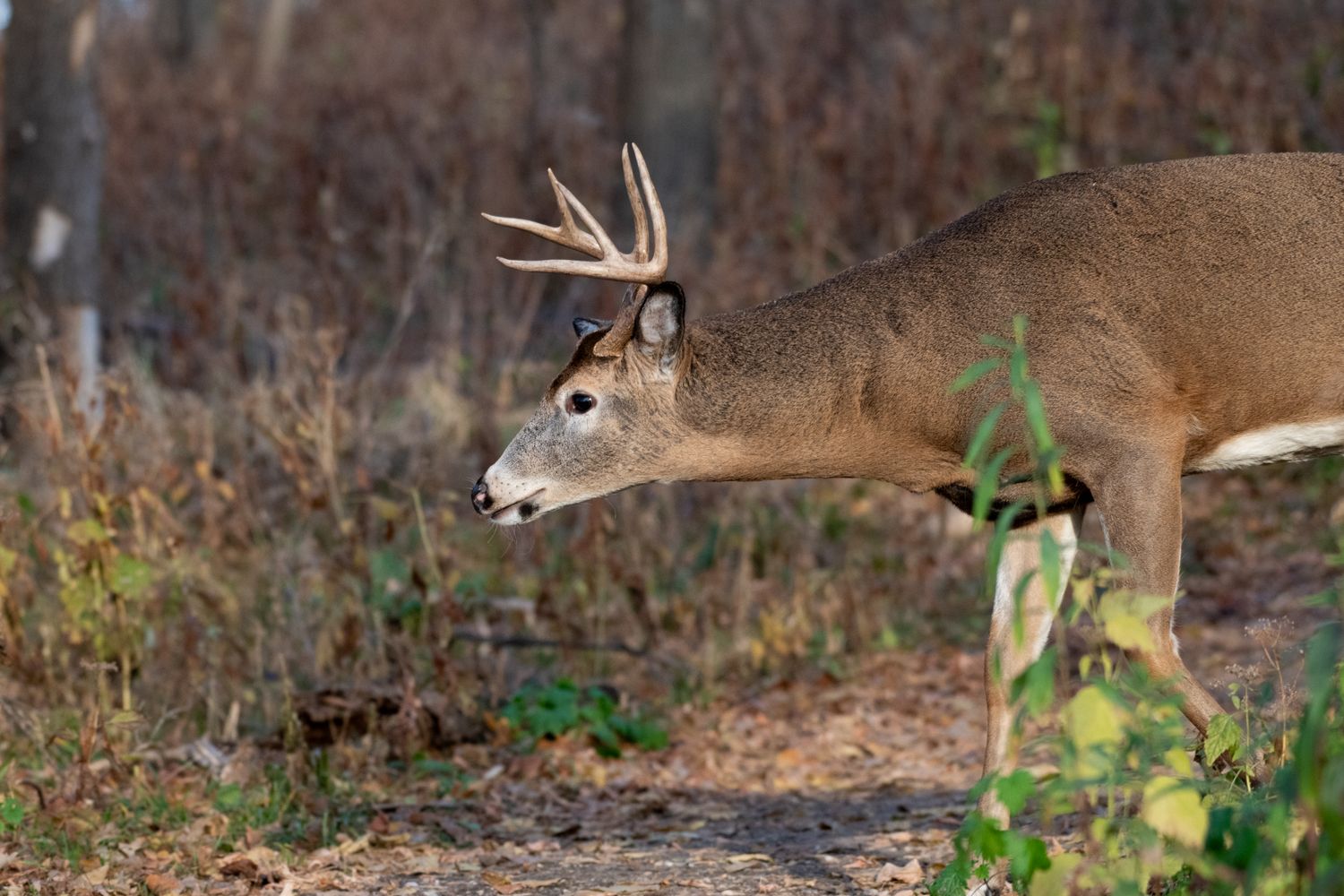
Ask ten hunters to name the best whitetail state in America and Missouri will be on nearly every list — usually right after Iowa, and usually with a "but you can actually get on ground there" attached. That last part is the whole story. Missouri grows giant, corn-fed, antler-point-protected bucks across its northern half, holds roughly 1.4 million deer statewide, and — unlike Iowa's brutal nonresident draw — lets you hunt on a lease the moment the ink is dry. For a landowner, that combination is money in the ground. For a hunter, it's the difference between watching Midwest giants on YouTube and sitting over one yourself.
This guide is the honest, numbers-first breakdown of what a Missouri hunting lease actually costs in 2026, why prices swing so hard from the Iowa-border trophy belt to the timbered Ozarks, and exactly what the law says about liability, trespass, Sunday hunting, and CWD before you sign anything. Whether you own north-Missouri ag ground and want to price it right, or you're a hunter trying to figure out if a $30-per-acre asking price is a steal or a stretch, here's what we'll cover:
- Missouri deer hunting by the numbers — herd size, harvest, and where the giants live
- What Missouri leases actually cost, region by region, with a quick-reference pricing table
- County-level pricing across the northern trophy belt, the Missouri River corridor, and the Ozarks
- The best counties for trophy bucks, meat, and turkeys — grounded in harvest and records data
- 2025–26 season dates, bag limits, the antler-point restriction, and license fees
- CWD management-zone rules that change how (and where) you can hunt and bait
- The full legal picture — recreational-use liability, the fee exception, insurance, and the purple-paint law
- How to price your own Missouri property, and how to market it to serious hunters
Missouri Deer Hunting by the Numbers
Missouri isn't a boutique deer state — it's a heavyweight with volume to match its trophy reputation. The Missouri Department of Conservation (MDC) estimates the statewide herd at about 1.4 million whitetails, and deer live in all 114 counties, from Mississippi River bottomland in the Bootheel to the glaciated crop country along the Iowa line.
The 2024–25 season closed on January 15 with a preliminary total harvest of 276,262 deer — 129,252 antlered bucks, 23,842 button bucks, and 123,168 does. That total was down about 15% from the 2023–24 record of 326,448, and roughly 8% below the five-year average. MDC attributed the dip to a November firearms opener that fell a week later than usual and a bumper acorn crop that kept deer in the timber and off the ag fields where hunters sit. In other words: a down year by Missouri standards is still more than a quarter-million deer on the ground. That's the kind of consistent harvest that makes leased ground pay.
Missouri deer at a glance
- Statewide herd: ~1.4 million whitetails across all 114 counties
- 2024–25 harvest: 276,262 total (129,252 antlered bucks · 23,842 button bucks · 123,168 does)
- Prior-year record: 326,448 (2023–24) — Missouri routinely runs 280,000–320,000
- Top harvest counties (2024–25): Franklin (6,208), Jefferson (4,900), Macon (4,495)
- Trophy engine: the northern glaciated plains — heavier bodies, bigger racks, older age structure
- Sunday hunting: fully legal, statewide, public and private land
- Season structure: long archery season plus multiple firearms portions from October into January
Here's the part that matters for leasing: Missouri's quality isn't evenly spread. MDC data and the state's Boone & Crockett record book both point the same direction — the northern third of the state, on the deep glacial soils near the Iowa border, produces the heaviest deer and the biggest antlers. The rugged, timbered Ozarks to the south carry lower deer densities and bucks that roam far more ground. Price follows biology. Understanding that north-to-south gradient is the single most useful thing you can bring to a Missouri lease negotiation, so let's build the pricing picture on top of it.
What Makes Missouri Special for Leasing
It's Iowa-caliber genetics with an open door. The northern Missouri counties along the Iowa line share the same rich glacial soils, the same corn-and-soybean buffet, and much of the same big-buck genetics that make Iowa famous. The difference is access: Iowa caps nonresident tags behind a multi-year draw, while Missouri sells nonresident permits over the counter. If you want to hunt genuine Midwest giants this fall rather than in three or four years, a Missouri lease is the most direct path there is.
The antler-point restriction built an older buck age structure. Across a large block of Missouri counties, MDC's four-point antler-point restriction (a legal buck must carry at least four points on one side) has protected yearling bucks for years. The practical result is more 2.5- and 3.5-year-old bucks surviving to grow the frames Missouri is known for. When you lease northern-Missouri ground, you're often leasing into a herd that's already managed for age — something a landowner can and should charge for.
Sunday hunting is legal, everywhere. Unlike several Mid-Atlantic and Appalachian states that still restrict or ban Sunday firearms hunting, Missouri has no blue law on deer. A weekend lease in Missouri is a true two-day weekend. For a working hunter driving in from Kansas City, St. Louis, or out of state, that doubles the value of every trip — and it's a selling point every landowner should put in the listing.
Volume plus quality. Some states offer trophies with thin overall numbers; others offer numbers with few giants. Missouri offers both — a quarter-million-plus deer harvested even in a down year, and a record book stacked with 170- and 190-inch bucks. That's a rare combination, and it's why leased Missouri ground holds its value season after season.
What Missouri Hunting Leases Cost in 2026
Let's put a number on it. According to University of Missouri Extension's long-running survey of Missouri hunting-lease rates (the same Extension work behind its Landowners' Guide to Lease Hunting in Missouri), Missouri hunting leases average roughly $25 per acre, with rates having climbed about 6% over the prior survey and every respondent reporting flat-to-higher pricing year over year — a range of 0% to 40% increases. That statewide average is a useful anchor, but it hides an enormous spread. Prime, managed, big-buck ground in the northern trophy belt can command well north of that number, while rugged Ozark timber near abundant public land trades for a fraction of it.
The honest headline for hunters: Missouri is a relative bargain for the quality. Prime ground here typically costs less per acre than comparable Iowa or Illinois trophy leases, which is exactly why so many nonresidents lease Missouri and drive in. The honest headline for landowners: if you own managed northern-Missouri ground and you're charging Ozark-timber prices, you're leaving real money on the table.
What drives a Missouri lease price up or down
- Region and soil. Northern glaciated plains > Missouri River corridor > southern Ozarks. Soil quality drives ag, ag drives body and antler size, and antler size drives price.
- Huntable acres, not total acres. A hundred acres of mixed timber, crop edge, and creek bottom out-prices two hundred acres of open pasture. Price the ground a deer actually uses.
- Management history. A property inside the antler-point-restriction counties with a track record of passing young bucks — or with food plots, a QDM history, and known shooters on camera — commands a premium.
- Waterfowl potential. Extension data is clear that ground leased for waterfowl brings the highest per-acre rates of any hunting lease. Flooded timber or a managed wetland changes the math entirely.
- Exclusivity and gun count. A one-party exclusive lease costs more per acre than a spot in a six-gun club. Fewer hunters, higher rate.
- Access and improvements. Interior road access, established stands and blinds, a cabin or a place to park a camper, electricity, and lockable gates all push the number up.
- CWD status. Ground inside the CWD Management Zone carries a baiting ban and extra carcass rules (more on this below). It doesn't kill demand, but savvy hunters factor it in.
Not sure where a specific property lands? Run the numbers through the HuntLease lease price calculator — it weighs acreage, region, habitat, food sources, and amenities into an estimate you can defend at the negotiating table, whether you're setting a price or checking one.
Missouri lease pricing — quick reference (2026)
| Region | Typical $/acre/yr | Premium ground | ~Annual cost, 150 ac |
|---|---|---|---|
| Northern glaciated plains (Iowa-border trophy belt) | $25–$45 | $50+ managed/exclusive | $3,750–$6,750 |
| Missouri River corridor & central counties | $18–$35 | $40+ prime bottoms | $2,700–$5,250 |
| Western prairie / mixed ag | $15–$28 | $35+ waterfowl | $2,250–$4,200 |
| Southern Ozarks (timbered, lower density) | $8–$18 | $20–$25 river bottoms | $1,200–$2,700 |
These are working market ranges for the 2025–26 lease year, anchored to the University of Missouri Extension statewide average (~$25/acre) and adjusted by region for soil, deer density, and management. Treat them as a starting frame, not gospel — an individual tract's huntability, gun count, and improvements can move it a full tier in either direction. Club memberships (a "gun" in a multi-party lease) commonly run a few hundred dollars to $1,500+ per hunter per year depending on acreage and quality. For a wider look at how Missouri stacks up against its neighbors, see our state-by-state hunting lease price comparison.
Missouri Lease Prices by Region and County
Missouri's deer quality — and therefore its lease prices — sort cleanly into a few regions. Here's how each one prices, why, and which counties to watch.
Northern glaciated plains — the trophy belt ($25–$45+/acre)
This is the headline region: the tier of counties riding the Iowa border and the deep-soil country just south of it. Think Adair, Clark, Harrison, Knox, Linn, Macon, Nodaway, Putnam, Schuyler, Scotland, Sullivan, and Chariton. Rich glacial soils grow big ag, big ag grows big-bodied deer, and years of the antler-point restriction have grown an older buck age structure. The old scouting wisdom holds up: generally, the closer to the Iowa line, the better the odds at a giant.
Macon County proves the point twice over — it was a top-three harvest county in 2024–25 (4,495 deer) and has produced state-record-caliber bucks, including a 194-6/8 typical taken in 2016. Managed, exclusive ground in these counties routinely leases at the top of the Missouri range, $35–$50+ per acre, and holds it because demand from serious trophy hunters — many of them nonresidents — never softens. If you own ground here and you've been passing young bucks, you're sitting on the most valuable lease dirt in the state. Hunters, expect competition: good northern leases turn over by word of mouth before they ever get listed. Set an alert and browse current Missouri lease listings so you're first in line when one surfaces.
Missouri River corridor & central counties ($18–$35/acre)
The band of counties along the Missouri River and through the center of the state — Callaway, Boone, Howard, Chariton, Cooper, Saline, Montgomery, and Warren — blends river-bottom timber, crop fields, and rolling hardwoods into some of the most reliable big-buck habitat in Missouri. Callaway County, in fact, has produced more Boone & Crockett record-book entries than any other county in the state, and the Missouri River corridor is a classic destination for hunters chasing a bookable buck.
Pricing here runs a notch below the far-northern trophy belt but reflects genuinely strong quality: expect $18–$35 per acre for solid ground, with prime river-bottom tracts pushing $40+. These counties also carry heavy CWD-management overlap (Callaway, Boone, Howard, Chariton, and many neighbors are all in the zone), so factor the baiting ban and carcass rules into your plan. This is the region where a mid-budget hunter gets the best blend of trophy potential and affordability.
Western prairie & mixed ag ($15–$28/acre)
West-central and northwestern Missouri outside the premier border counties — mixed cropland, CRP grasslands, and scattered timber — offers strong deer numbers at friendlier per-acre rates. The standout wild card here is waterfowl: Missouri sits on the Mississippi Flyway, and Extension data shows ground leased for ducks and geese brings the highest per-acre rates of any hunting lease. A tract with a managed wetland, flooded corn, or a reliable slough can out-earn a pure deer lease several times over. If your ground floods, price it as a waterfowl lease, not a deer lease.
Southern Ozarks ($8–$18/acre)
The rugged, heavily timbered Ozarks — the southern third of the state — are a different animal. Deer densities are lower, the terrain is steeper, bucks travel far more ground, and there's abundant public land (Mark Twain National Forest and large conservation areas) drawing off some lease demand. All of that pushes lease rates down to the $8–$18 range, with river bottoms and managed private tracts reaching $20–$25. For a hunter who values solitude, big country, and a lower price of entry over the highest odds at a 170-incher, the Ozarks are Missouri's value play. Just go in clear-eyed: you're leasing a different kind of hunt.
Wherever you land, the same principle applies to both sides of the deal: price the huntable ground and the experience, not the raw acreage. A hunter overpaying for open pasture and a landowner underpricing a managed creek bottom are making the same mistake from opposite directions. If you're weighing how to structure the deal itself, our breakdown of per-hunter vs. per-acre lease pricing lays out which model earns landowners more and costs hunters less.
Best Missouri Counties by Goal
"Best county" depends entirely on what you're after. Here's how Missouri sorts by objective, grounded in MDC harvest data and the state's record book.
For a booker — top trophy counties
If your goal is a Boone & Crockett-caliber buck, aim north and center. The counties that consistently show up in the record book and in serious hunters' plans include Macon, Adair, Knox, Scotland, Clark, Putnam, Sullivan, Linn, Harrison, and Nodaway across the northern trophy belt, plus Callaway, Chariton, and Howard in the Missouri River corridor. Callaway leads the state in all-time record-book entries; the northern-border counties give you the best raw odds at an old, heavy deer. Leases here cost the most for a reason — but a single Missouri giant makes the per-acre premium look cheap.
For the freezer — top harvest counties
If you're optimizing for consistent opportunity and meat, follow the raw harvest numbers. The top overall harvest counties in 2024–25 were Franklin (6,208), Jefferson (4,900), and Macon (4,495). Franklin and Jefferson — both in the greater St. Louis exurbs — combine high deer numbers with generous antlerless permit allowances, meaning you can fill multiple tags in a season. For a family or a small group that wants to keep the freezer full without chasing trophies, these high-density counties deliver.
For turkeys, too
Missouri is one of the country's premier turkey states, and many deer leases double as spring turkey ground at no extra cost. The same northern and central ag-and-timber counties that grow big bucks — plus the Ozark border counties — hold strong turkey numbers. If you're a landowner, marketing your lease as a deer-and-turkey property widens your buyer pool and justifies a higher annual rate. If you're a hunter, a lease you can hunt for both November bucks and April longbeards is far better value than a deer-only arrangement.
Missouri Deer Seasons, Regulations & Fees (2025–26)
Missouri's season structure is generous — a long archery window bracketing a robust firearms schedule — which is part of why leased ground here gets used hard from September into January. All dates below are MDC's 2025–26 framework; always confirm current dates and county-specific rules on the MDC website before you hunt.
2025–26 season dates
- Archery: September 15 – November 14, 2025, and November 26, 2025 – January 15, 2026
- Firearms Early Antlerless Portion: October 10–12, 2025 (open counties)
- Firearms Early Youth Portion: November 1–2, 2025
- Firearms November Portion: November 15–25, 2025 (the 11-day main gun season)
- Firearms CWD Portion: November 26–30, 2025 (open CWD Management Zone counties only)
- Firearms Late Youth Portion: November 28–30, 2025
- Firearms Late Antlerless Portion: December 6–14, 2025 (open counties)
- Firearms Alternative Methods Portion: December 27, 2025 – January 6, 2026
Bag limits and the antler-point restriction
Missouri lets you take one antlered deer across all firearms portions combined, and up to two antlered deer total for the whole season when you add archery — but only one buck may be taken before the November firearms portion opens. Antlerless opportunity is county-driven: in most counties a hunter may fill up to four firearms antlerless permits, while a limited set of counties are capped at one, and a few are closed to antlerless firearms hunting entirely.
The rule that shapes Missouri's buck quality is the four-point antler-point restriction in effect across a large block of counties: to be legal, a buck must have at least four points on one antler. It's the single biggest reason northern Missouri holds so many mature deer, and it's worth knowing whether the county your lease sits in is an APR county — it changes what walks past your stand. MDC publishes the current APR county list and any changes each year.
License and permit fees (2025–26)
- Resident Firearms Deer Permit: $19.50 (covers one antlered + one antlerless deer)
- Resident Archer's Hunting Permit (deer & turkey): $19.50
- Resident Small Game Permit: $12
- Nonresident Firearms Deer Permit: ~$305.50 (rising toward $360 under MDC's 2026 adjustments)
- Nonresident Archer's Hunting Permit: ~$305.50
- Nonresident Small Game Permit: ~$77
- Youth (ages 6–15) deer/turkey permits: ~$9.75
- Resident landowner permits: qualifying Missouri resident landowners receive free firearms deer and spring turkey permits for hunting their own property
MDC has been phasing in permit price adjustments across 2025 and 2026, so verify the exact current fee when you buy. The nonresident line is the one that matters most for out-of-state lease hunters — at roughly $300+ per season for the deer permit on top of the lease itself, it's a real cost to budget, though still cheap relative to what a comparable Iowa or Illinois trophy tag runs once you finally draw it.
Sunday Hunting in Missouri
Good news, and worth stating plainly because so many eastern states get this wrong: Sunday hunting is fully legal in Missouri — deer and most other game, on both public and private land, with no statewide blue law. There's no split-season workaround, no archery-only Sunday carve-out, no midday firearms closure.
For a leaseholder this is a genuine value multiplier. A hunter driving in from a metro area or out of state gets a true two-day weekend on the stand instead of a Saturday-only trip, which effectively doubles the useful days per drive. Landowners should treat "legal Sunday hunting" as a headline feature in any listing — it's a concrete reason a lease in Missouri is worth more per weekend than the same ground would be across the line in a Sunday-restricted state. (A handful of local ordinances can affect discharge of firearms near town; confirm local rules only if your ground borders a municipality.)
CWD in Missouri: What Leaseholders Need to Know
Chronic wasting disease is the one regulatory wrinkle that genuinely changes how you hunt a Missouri lease, so read this section carefully whether you're leasing or listing. MDC actively manages CWD, and for the 2025–26 seasons the CWD Management Zone spans 38 counties. The zone was expanded again this year, adding Callaway, Cape Girardeau, Daviess, Harrison, Henry, Marion, Miller, Moniteau, Morgan, Ralls, St. Louis, and Texas counties — several of which sit squarely in the trophy belt and river corridor where the best leases are.
If your lease falls inside the CWD Management Zone, three rules matter most:
- Year-round feeding/baiting ban. Placing grain, salt, minerals, or other consumable attractants to draw deer is prohibited year-round inside the zone. There are narrow exemptions — feed within 100 feet of a residence or occupied building, feed inaccessible to deer, normal agricultural practices, and MDC-authorized management efforts — but the practical takeaway is simple: no bait piles or mineral sites on CWD-zone leases. Plan your hunt around natural food, funnels, and terrain, not a feeder.
- Carcass-movement and Telecheck rules. Hunters must Telecheck a deer before transporting it (or its parts) out of the county of harvest, or by 10 p.m. on the day of harvest — whichever comes first. Unused parts must be disposed of in trash bound for a sanitary landfill or left on the property where the deer was harvested.
- The extra CWD firearms portion. Open CWD-zone counties get the additional November 26–30 firearms CWD portion — extra opportunity that non-zone counties don't have. Some zone counties also require mandatory CWD sampling on opening weekend of the November firearms portion.
Does CWD-zone status lower a lease's value? Modestly, at most. Demand for good northern and central Missouri ground stays strong because the deer quality is worth it — but an informed hunter will price in the baiting ban, and a smart landowner will get ahead of it by describing the property's natural food and structure (standing crops, oak flats, creek funnels) rather than leaning on a feeder that's now illegal anyway. A few counties in Missouri also see periodic late-summer EHD (epizootic hemorrhagic disease) outbreaks after wet springs; these are localized and self-limiting, but worth a question if you're leasing new ground after a dry, midge-heavy summer.
The Legal Side: Liability, Leases & Trespass
This is the section landowners skip and later regret. Missouri law is generally friendly to landowners who open their ground to hunters — but that protection has a hole in it exactly where a paid lease sits. Understand this before you cash a check.
The recreational-use statute — and the fee exception that changes everything
Missouri's Recreational Use Act (RSMo §§ 537.345–537.348, on the books since 1983) says a landowner owes no duty of care to a person who enters the land without charge for recreational use — including hunting — and no duty to warn of natural or artificial conditions on the property. That's strong protection. But the statute carves out two big exceptions: it does not shield a landowner from (1) malicious or grossly negligent failure to warn of a known dangerous or ultrahazardous condition, or (2) injury to a person who has paid a charge to enter the land.
Read that second exception again, because it's the whole ballgame for leasing: the moment you accept lease money, the recreational-use immunity falls away. A paying lessee is not a permission guest — they've paid a "charge," and Missouri's statute specifically removes them from its protection. That doesn't mean you're automatically liable if a hunter gets hurt; it means you no longer have the statute standing between you and a lawsuit. Your protection now has to come from the lease itself and from insurance. Our guide on landowner liability when a hunter gets hurt walks through exactly how this plays out.
What actually protects you: the written lease + a release + insurance
Because the statute won't cover a paid lease, three things do the real work:
- A written lease with a liability-release and assumption-of-risk clause. A handshake is worth nothing in court. A signed lease in which the hunter acknowledges the risks of hunting and releases you from ordinary negligence is your first and best line of defense. (It won't cover gross negligence — so still fix that broken tower stand.)
- Proper insurance. Standard farm and homeowner policies frequently exclude, or sharply limit, liability arising from a commercial hunting lease. Many landowners need a hunting-lease liability policy or a rider naming them as additional insured. Confirm coverage before the season, not after an incident — our hunting lease insurance guide covers what farm policies do and don't include.
- A lease that spells out the rules. Number of hunters, guests, stand safety, ATV use, no-subletting, and who's responsible for what. Ambiguity is where disputes start.
A Missouri lease checklist — get these in writing
- Names of the landowner and every hunter (and whether guests are allowed)
- Exact property described, with a map and boundary lines
- Term and dates, and whether it auto-renews
- Rent, deposit, and payment schedule
- Permitted game and methods (deer, turkey, small game, waterfowl)
- Number of hunters and stand/blind limits
- Liability release, assumption of risk, and indemnification
- Insurance requirements (who carries what, additional-insured naming)
- No-sublet / no-transfer clause and conduct rules (trespass reporting, gates, trash, ATVs)
- Termination and default terms
You don't have to draft it from a blank page — start from our sample hunting lease agreement and adapt it to your property. And if you're building the whole arrangement from scratch, our landowner walkthrough at how HuntLease works for landowners takes you from pricing to a signed, insured lease.
Posting and the purple-paint law
Missouri's trespass rules give you a low-effort way to keep your leased ground protected. Under the Purple Paint Law (RSMo § 569.145, enacted 1993), you can mark boundaries with purple paint instead of endless "No Trespassing" signs. The legal spec: each purple mark is a vertical line at least eight inches long, with the bottom of the mark three to five feet off the ground, placed no more than 100 feet apart and readily visible; or a post capped/marked on at least its top two inches (bottom of the cap three to five and a half feet high) placed no more than 36 feet apart. Enter posted or fenced ground knowingly and it's first-degree trespass — a class B misdemeanor carrying up to a $500 fine and/or six months in jail. For a landowner leasing to out-of-area hunters, marking boundaries in purple is cheap insurance against neighbors and wandering hunters alike; for a lessee, respecting them is non-negotiable.
How to Price Your Missouri Property
If you own Missouri ground and you're ready to lease it, here's a five-step way to land on a number that's fair to both sides — and that you can defend.
- Start with your region's base rate. Use the quick-reference table above. Northern trophy belt? Start around $30/acre. River corridor or central? $20–$25. Ozarks? $10–$15. That's your anchor before any adjustments.
- Adjust for huntability and management. Add for crop edge, timber diversity, water, food plots, a documented antler-point/QDM history, known shooter bucks on camera, and interior access. Subtract for open pasture, road noise, heavy neighboring pressure, or a lack of cover. Waterfowl ground? Reprice it up — flooded habitat is the highest-value lease there is.
- Run it through the calculator. Plug acreage, region, habitat, food sources, and amenities into the HuntLease lease price calculator for an objective estimate that keeps you from pricing on emotion.
- Decide per-acre vs. per-hunter. Smaller or premium tracts often earn more billed per gun; larger tracts price cleanly per acre. Our per-hunter vs. per-acre breakdown shows how to choose. For broader acreage benchmarks, see our pricing-by-acreage guide.
- Set the rules that protect the price. Cap the number of hunters, require the written lease and insurance, and price exclusivity as the premium it is. A well-run, low-pressure lease is worth more next year than a cheap free-for-all that burns the ground out.
For the landowner's-eye view of setting a first-year number, our how much should I charge for a hunting lease guide is a good companion to this section.
Marketing Your Missouri Lease
Once you've priced it, the difference between a lease that sits and a lease that signs is how you present it. Serious hunters — the ones who pay on time, follow the rules, and re-up year after year — are shopping on specifics.
Write a listing title that sells the specifics. "150-Acre Macon County Deer & Turkey Lease — APR County, Managed for Age, Legal Sunday Hunting" will out-pull "Hunting land for lease" every time. Lead with county, acreage, the game, and one or two differentiators (trophy management, water, cabin, exclusivity).
Target the right buyers. Missouri leases sell to three main markets: in-state hunters near the metros (St. Louis, Kansas City, Columbia, Springfield) who want manageable drive time; nonresidents from surrounding states chasing Missouri's over-the-counter trophy access; and small groups splitting a club-style lease. Northern trophy ground skews nonresident and premium; Ozark and freezer-filler ground skews local and value.
Screen your hunters. Ask how many people will hunt, whether they'll bring guests, what methods they use, whether they'll respect the antler-point rules and your management goals, and whether they'll carry insurance. Red flags: reluctance to sign a written lease, pushback on insurance, vagueness about how many guns will really be on the ground, or an interest in subletting. A good lessee is a multi-year relationship; screen like it.
Put your scouting to work. Trail-camera history and a season's worth of stand data don't just help you hunt — they help you sell the lease and justify the price. If you're setting up cameras to build that case, our roundup of the best trail cameras and cellular scouting tech for 2026 covers what to run, and a hunter walking into new Missouri ground should pack smart — see our lease hunter's guide to hunting backpacks and packs for hauling gear in and deer out.
Ready to list? Post your ground and reach Missouri hunters through HuntLease listings, or start with the landowner walkthrough.
Missouri Hunting Lease FAQ
For landowners
How much can I charge to lease my Missouri hunting land? Statewide, Missouri leases average around $25 per acre, but region drives everything: northern trophy-belt ground can command $35–$50+ per acre while Ozark timber may bring $8–$18. Managed ground with an antler-point/QDM history, water, and good access sits at the top of its regional range. Run your specifics through the lease price calculator for a defensible number.
If I charge rent, am I still protected by the recreational-use statute? No — and this is the most important thing on this page. Missouri's recreational-use immunity (RSMo §§ 537.345–537.348) applies to people who enter without charge. Accepting lease money removes a paying hunter from that protection. Your real protection becomes a written lease with a liability release plus proper hunting-lease insurance.
Does my farm insurance cover a hunting lease? Often not, or not fully — many farm and homeowner policies exclude commercial hunting-lease liability. Confirm coverage or add a hunting-lease policy or rider before the season. See our insurance guide.
Can I hunt my own leased-out ground for free? As a qualifying Missouri resident landowner you're eligible for free firearms deer and spring turkey permits on your own property — but if you've leased the hunting rights, spell out in the lease whether you retain any hunting access. Don't leave it to assumption.
For hunters
Is a Missouri lease cheaper than Iowa or Illinois? Generally yes. For comparable trophy quality, Missouri prime ground typically leases for less per acre than Iowa or Illinois — and Missouri sells nonresident deer permits over the counter rather than through a multi-year draw. That access-plus-value combination is exactly why so many out-of-state hunters lease Missouri.
Where should I lease for the best shot at a giant? The northern glaciated-plains counties along the Iowa border — Adair, Clark, Knox, Macon, Putnam, Scotland, Sullivan, Harrison, Nodaway — and the Missouri River corridor (Callaway, Chariton, Howard). Expect to pay for it; those are the priciest leases in the state for good reason.
Can I bait or run a feeder on my lease? Not if the property is inside the CWD Management Zone (38 counties for 2025–26), where feeding and baiting are banned year-round with narrow exemptions. Confirm the county's status before you plan your setup, and be ready to hunt natural food and terrain.
Can I hunt Sundays? Yes — Sunday hunting is fully legal statewide in Missouri, which makes a weekend lease genuinely worth two days on the stand.
What should I get in writing? A written lease covering term, rent, permitted game and methods, number of hunters, stand safety, no-subletting, and a liability release. Start from our sample lease agreement and don't hunt on a handshake.
The Bottom Line
Missouri is the value pick among America's elite whitetail states: Iowa-caliber genetics in the northern counties, a quarter-million-plus deer harvested even in an off year, legal Sunday hunting, and over-the-counter access — all at lease rates that undercut its famous neighbors. The catch for landowners is the fine print: the moment you charge rent, Missouri's recreational-use shield drops, so a written lease and real insurance aren't optional. The catch for hunters is that the best northern ground moves fast and the CWD zone changes how you can hunt it. Price the region honestly, get the legal side right, and Missouri ground pays — season after season.
Own Missouri land? Price it with the lease price calculator and list it on HuntLease. Looking to hunt? Browse Missouri hunting leases and be first in line when the good ground opens up.
Last updated: July 2026. Season dates, permit fees, CWD-zone boundaries, and antler-point-restriction counties change annually — always confirm current regulations with the Missouri Department of Conservation before hunting. Lease-price ranges are market estimates drawn from University of Missouri Extension survey data and regional reporting; individual properties vary widely. This article is general information, not legal advice; consult a Missouri attorney for your specific lease and liability questions.