HuntLease is a participant in the Amazon Associates Program. We may earn a commission on qualifying purchases made through links on this page — at no extra cost to you.
On most leases, the deer everyone’s looking for is bedded within 100 yards of a tree nobody has hung a stand in yet. That’s the part of the woods you can’t reach with the same chained-up ladder stand you’ve sat in for nine seasons. The 2026 treestand and saddle market gives you better answers than that — lighter setups, safer connection systems, and platforms that go up trees you’d never have tried before. This guide breaks down the four real choices (hang-on, ladder, climber, saddle), the gear that makes each one work, and how to pick the right one for the way your lease is hunted.
The honest decision: stand or saddle?
Most lease hunters fall into one of three setups: a permanent ladder stand on the best food edge, one or two hang-on stands they leave up all season, and either a climber or a saddle for the day a buck shows up somewhere they didn’t plan for. Each one earns its place for a different reason.
Ladder stands win on comfort, sit time, and how easy they are to invite a kid or a buddy into. Hang-ons are the workhorse of a multi-year lease — pick the right tree, leave it through the season, and you’ve got a reliable sit you can walk in to in the dark. Climbers are the answer when a tree is straight, branchless, and within 30 yards of fresh sign. Saddles are the answer when none of that is true — crooked oak, leaning hickory, the only cover within bow range of a scrape — and you need to be 25 feet up in 12 minutes without making a sound.
Before you spend anything, run the property through the HuntLease Lease Price Calculator and look at how the hunting pressure breaks down. A 200-acre lease with three hunters can usually justify two ladder stands plus a mobile rig. A 60-acre tract with five hunters is a saddle property whether the hunters know it yet or not — mobility is the only way to stay ahead of the pressure.
Ladder stands: the everyday sit
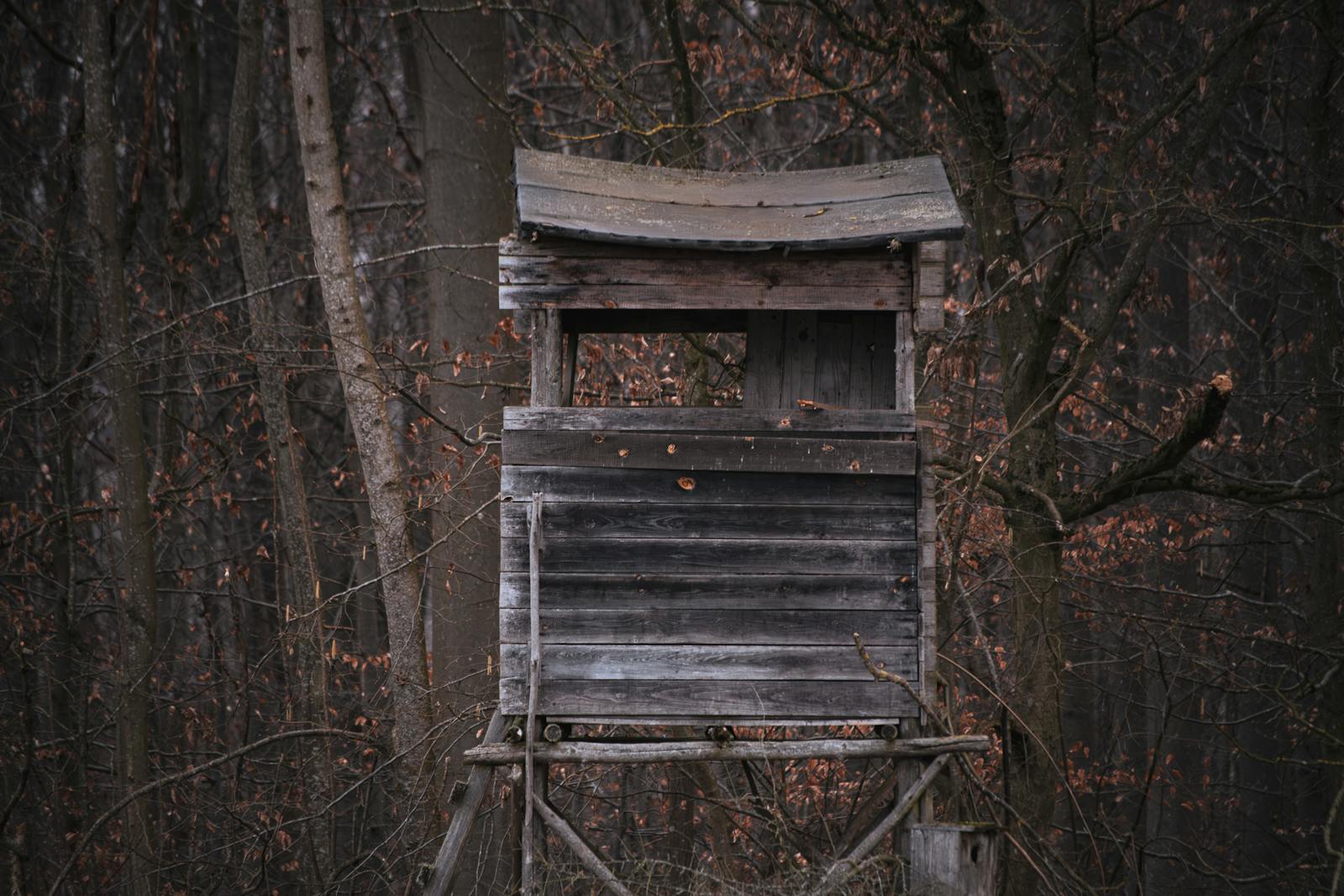
If you’re hanging one stand on a lease, this is usually it. Ladder stands give you a wide, stable platform, a real seat, and the kind of arm rest that lets you hold a bow at draw without your shoulder going to pieces by 9 AM. They’re also the slowest to relocate, so put them where the sign concentrates year after year — a creek crossing, an inside corner of a soybean field, the pinch between two bedding areas.
For a two-person lease setup — you and a guest, you and a kid, you and a paying member — the Big Game Striker XL 17.5′ Two-Person Ladder Stand is the most-reviewed two-seater on Amazon for a reason. Flip-back seat, padded armrests, a deep foot platform that fits a pair of pac boots, and a price that doesn’t require a board meeting. The 17.5-foot height puts you well above the deer’s normal scan window, which matters more in October than people think.
Practical tip: a ladder stand telegraphs your presence to the rest of the lease. If you’re sharing the property, mark its location in your HuntLease scouting map so other members can avoid the wind line you depend on. A ladder stand that’s been busted twice by another member walking in downwind is just expensive scrap aluminum.
Hang-on stands: the lease workhorse
Most experienced lease hunters end up with a small fleet of hang-on stands instead of one or two ladders. The math is straightforward: a hang-on weighs a third of what a ladder weighs, costs less per location, and can be hung in trees a ladder will never reach. Three hang-ons set in trees with three different wind directions gives you a huntable property on almost any forecast.
The benchmark hang-on for serious lease hunters is the Millennium Treestands Monster Hang-On. The sling-style seat is the difference — you can sit all day without your legs going numb, which sounds like a small thing until you’ve done it. The platform is wide enough to stand and shoot, the leveling system actually works on the kinds of trees you find on a real lease (not the perfectly straight oaks in product photos), and the build quality holds up to four or five seasons of weather.
Hang-ons live or die on the climbing system. Skip the screw-in steps; they’re slow, noisy, and most leases prohibit them anyway. A four-pack of climbing sticks gets you to 20 feet in under five minutes. The Hawk Helium 20″ Climbing Sticks (4-pack) are the most common pick on private leases for a reason: aluminum, non-slip steps, and light enough to carry in with the stand on the same trip. Pair them with a strap-on aider step if you’re tall enough to want to skip a section.
Hang one stand for an east wind, one for a west wind, and a third somewhere creative — a fence-row hardwood you walked past three times, or a single ash on the upwind side of a clear-cut. The mistake on most leases is hanging three stands on the same trail.
Climbers: the right tool, the wrong reputation
Climbing treestands took a reputation hit when saddles got popular, but they’re still the fastest way for a single hunter to get 20 feet up a straight tree. If your lease has stands of red oak, big poplars, or planted pines with no low branches, a climber is the most efficient single-hunter setup ever invented.
The Summit Treestands Viper SD Climbing Treestand is the version most hunters end up with after they try and return two cheaper climbers. The closed-front design adds a backrest for all-day sits, the Bigfoot platform is wider than the original, and the suspended foam seat lets you sit longer than a hammock-style stand. It’s not light — expect 20 pounds — but a backpack rigging makes it manageable on a 400-yard walk.
The honest limitation: climbers need a straight tree with no branches in the climbing zone, and most of the trees on a hardwood lease have at least one branch in the way. If you’re hunting cutovers, planted pine stands, or river-bottom poplars, a climber is the right answer. If you’re hunting mature hardwoods, look at the saddle section below.
Saddle hunting: the mobile lease setup
Saddles solved a problem that mobile treestand hunters had been working around for years — how to get up an ugly tree quietly and shoot 360 degrees once you’re up there. A saddle hunter typically carries a saddle (the harness you sit in), a tether and lineman’s belt, a platform, four climbing sticks, and a pack. Total weight: usually under 18 pounds. Total time to be huntable in a tree: 10 to 15 minutes once you’ve done it twenty times.
The saddle itself is a personal-fit decision — Tethrd, Latitude, Trophyline, and Cruzr all make solid options, and most hunters buy direct from the maker so the fitter can size the bridge. What you can source on Amazon are the accessories that make a saddle setup functional in the tree.
The most important saddle accessory after the saddle itself is the platform. The Tomaki Adjustable Tree Saddle Platform is a 12×12 aluminum platform that adapts to crooked trees — which is the whole point of saddle hunting. It’s an Amazon’s Choice listing for the saddle-platform category, light enough to belt-carry on a public-to-private walk, and grippy enough that you can shift weight to draw without the platform squeaking. Saddle hunters who’ve been at it for a few seasons usually own two: one rigged on a regular setup tree, one in the pack for the unexpected sit.
Climbing sticks matter even more for a saddle hunter than for a hang-on hunter, because you’re using them as both the climb up AND as the lineman’s anchor while you transition into the saddle. The same Hawk Helium sticks work here — quiet, light, and you can leave them on the tree if your lease lets you cache gear.
The safety gear that’s not optional
Falls from elevated stands and saddles are the leading non-firearm cause of serious hunting injuries. The Tree Stand Safety Awareness Foundation puts the number around one in three treestand hunters experiencing a fall serious enough to require medical attention over their hunting career. Almost all of those falls happen during the climb up or the transition into the stand — not while sitting and waiting.
The two pieces of gear that prevent that:
A full-body harness, worn every time, climbing in and climbing out. The Hunter Safety System X-1 Bow-Hunter Harness is the most-reviewed treestand harness on Amazon (nearly 5,000 ratings, 4.7 stars) and the one most lease guides recommend to first-year members. Lightweight enough to wear all day, designed to let you draw a bow at full extension, and the leg loops don’t bind when you’re seated. Buy the one that fits your chest size and replace it every five years even if it looks fine — webbing degrades from UV no matter how careful you are.
A lifeline rope, rigged before you leave the ground. The HSS Reflective Lifeline (30′) attaches above your stand, runs to the ground, and lets your harness tether stay connected the entire climb up and down. Stand falls overwhelmingly happen during the transition — stepping from the last stick onto the stand — and a lifeline is the single piece of gear that eliminates that failure mode. Reflective so you can find your tether in the dark, prusik knot pre-tied so you don’t have to remember the rigging at 5:30 AM. If your lease has children or first-year hunters on it, this is the one piece of gear you should standardize across every stand on the property.
If your lease agreement doesn’t already require a harness and lifeline on every elevated stand, it should. Our free sample hunting lease agreement template includes a safety clause that lists harness use as a non-negotiable; landowners renewing a 2026 lease should make sure their agreement carries the same language.
How your lease shapes the setup
The right stand for your lease depends on three things: how many hunters share the property, how much sign concentrates in one spot vs. moves through the season, and whether the lease lets you leave stands up year-round.
Small leases (under 80 acres), 1–2 hunters. Two well-placed hang-ons covering opposite wind directions, plus a saddle setup for the day a buck shows up in an unexpected oak. Total cost: $700–$1,400 depending on whether you go premium on the saddle.
Mid-size leases (80–300 acres), 3–5 hunters. One permanent ladder on the most reliable food source, three or four hang-ons spread across wind directions and travel corridors, and one mobile saddle or climber rig per hunter. This is where most serious lease setups land.
Large leases (300+ acres), 5+ hunters. Permanent ladders at the named sits, hang-ons rotated season to season as sign moves, mobile setups (saddle or climber) for everyone, and a written stand-reservation system so two members don’t accidentally crowd the same wind. If you’re running a club like this, mark every stand location on the scouting map and use the Field Ready Score to pick which sit is going to fire on a given morning.
Cross-reference the regional patterns from our wind-strategy guide — the prevailing wind in your county should be driving where the permanent stands go, not where the easiest tree happens to be.
What this looks like for a 2026 hunter
If you’re looking at a fresh lease for the first time this year, the most common mistake is buying everything at once. A better order of operations:
One: get into the property in May or June with a saddle or a climber, and find the actual sign before you commit a single permanent stand. Most lease hunters set their ladders in spots that looked good on satellite and ended up 75 yards from where the deer were actually moving.
Two: hang the hang-ons in late July, after you’ve walked the property at least twice and confirmed bedding, water, and travel corridors. Hang them with the eventual fall wind direction in mind, not the summer south wind that’s blowing the day you set them.
Three: put the ladder up in August, on the location that’s consistent year over year — a food edge or a creek crossing — not on a fresh hot spot. Ladders are for spots that don’t move.
Four: keep the saddle or climber ready in the truck through the rut, and use it on the days a fresh scrape, rub line, or wind shift puts the deer somewhere your permanent stands don’t cover.
If you’re still looking for a lease, browse current HuntLease listings by state and acreage — properties that explicitly allow stands to stay up year-round are worth more to a serious hunter than the per-acre rate suggests, and the listing notes usually say so. And if you’re a landowner figuring out what your property can support, read how HuntLease works for landowners and price the tract against comparable properties in your region with the Lease Price Calculator.
The right stand setup is the one that fits the lease, the hunters, and the way the deer actually move — not the one with the best Instagram photos. Build the system in that order and the gear lasts a decade.
Ready to find a lease that fits the way you want to hunt? Browse all HuntLease listings, filter by state, and check the “stands allowed year-round” notes before you contact the landowner. Or, if you’re the one putting a lease together this fall, our free Lease Price Calculator will tell you what your property is worth before you list it.