Introduction
You own land. Maybe it's been in your family for generations. Maybe you bought it as an investment. Maybe you farm part of it, but have acreage sitting idle.
Here's what you probably haven't fully considered: Your land is earning far less than it could be.
Traditional farming and ranching are honorable pursuits, but they're also increasingly competitive, capital-intensive, and weather-dependent. Meanwhile, landowners across the country are discovering that "alternative" income streams—things that don't involve planting crops or raising livestock—can generate substantial revenue with far less work and risk.
These aren't get-rich-quick schemes. These are legitimate, proven business models that smart landowners are using to:
- Diversify their income beyond traditional agriculture
- Create passive or semi-passive revenue streams
- Maximize the value of land that might otherwise sit unused
- Build long-term wealth while maintaining ownership of their property
In this comprehensive guide, we'll explore five of the most promising alternative income opportunities for landowners in 2026. We'll compare their pros and cons, startup requirements, and profit potential—and help you decide which might be the best fit for your property.
Why Alternative Income Matters for Landowners
Before we dive into specific opportunities, let's talk about why diversifying your land income is more important than ever.
The Reality of Modern Agriculture
Traditional farming faces serious headwinds:
- Thin profit margins squeezed by input costs and commodity prices
- Climate volatility affecting crop yields and livestock health
- Capital requirements for equipment, seeds, fertilizers getting higher every year
- Time intensity requiring year-round labor and management
Many farmers net less than $100 per acre per year from traditional row crops after expenses. Some years, they lose money.
The Rise of the "Land Portfolio" Approach
Smart landowners are increasingly thinking like investors, asking:
- "What's my return on this asset?"
- "How can I maximize value with minimal additional investment?"
- "What revenue streams require the least ongoing effort?"
- "How can I hedge against bad years in one income source?"
The answer? Multiple, diversified income streams.
Just like a financial portfolio, a diversified land portfolio reduces risk and maximizes return.
Overview: 5 Alternative Income Opportunities
Here's a quick overview of what we'll cover, with a snapshot of key metrics:
| Income Stream | Startup Cost | Annual Income Potential | Effort Level | Best For |
|---|---|---|---|---|
| Hunting Leases | $0-$500 | $10-$25/acre | Low | Properties with wildlife habitat |
| Solar Leases | $0 | $500-$2,000/acre | Very Low | Large, flat, sunny properties near transmission |
| Farm Stays/Agritourism | $5,000-$50,000 | $5,000-$50,000+ | Medium-High | Scenic properties near population centers |
| Timber Management | $0-$5,000 | $500-$5,000/acre (periodic) | Low-Medium | Forested land with mature trees |
| Grazing Leases | $0-$2,000 | $10-$50/acre | Low | Pasture land and grassland |
Now let's explore each in detail.
Option 1: Hunting Leases
What It Is
A hunting lease is an agreement where you allow hunters to access your land during hunting season in exchange for payment. It's one of the most popular and accessible alternative income streams for rural landowners.
How It Works
The Basic Model:
- You determine which portions of your property to lease
- You set lease terms (dates, rules, species allowed, etc.)
- You connect with hunters looking for access
- Hunters pay you for seasonal or year-round access
- You maintain ownership and can often continue other land uses
Lease Structures:
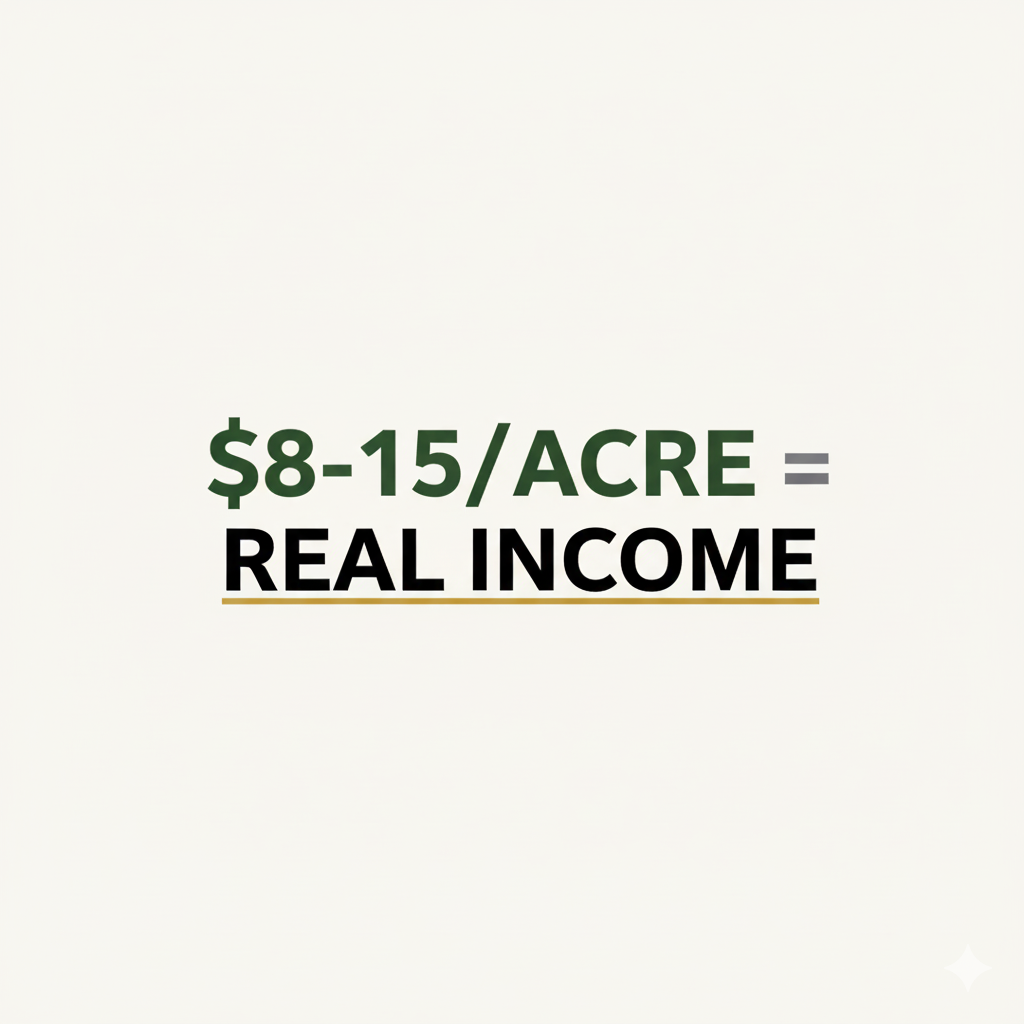
- Per-acre pricing: Charge $X per acre (typical: $8-$25/acre depending on region and habitat quality)
- Per-person pricing: Charge per hunter regardless of acreage
- Exclusive leases: One person/group gets sole access for premium pricing
- Non-exclusive: Multiple hunters share access at lower per-person rates
How Much Can You Charge for a Hunting Lease? (Price Breakdown Guide)
Income Potential
Conservative estimate: $10-$15 per acre annually Good quality habitat: $15-$25 per acre annually
Premium properties: $25-$50+ per acre annually
Real examples:
- 100 acres in Maryland with good deer population: $1,500-$2,000/year
- 250 acres in Texas with quality habitat: $5,000-$7,500/year
- 50 acres in Pennsylvania near other leased land: $750-$1,000/year
Startup Costs
Minimal investment required:
- Liability insurance (optional but recommended): $300-$600/year
- Lease agreement template: Free-$200
- Property boundary markers/signs: $50-$200
- Total: $0-$1,000 to start (insurance can be required from hunters instead)
Time Commitment
Initial setup: 5-10 hours
- Creating your listing
- Drafting lease agreement
- Communicating with potential hunters
- Walking property boundaries
Ongoing: 2-5 hours per season
- Collecting payments
- Basic communication with hunters
- Occasional property checks
Effort level: LOW ⭐⭐☆☆☆
Pros and Cons
Pros: ✅ Zero or very low startup cost
✅ No infrastructure required
✅ Can continue other land uses (farming, timber, etc.)
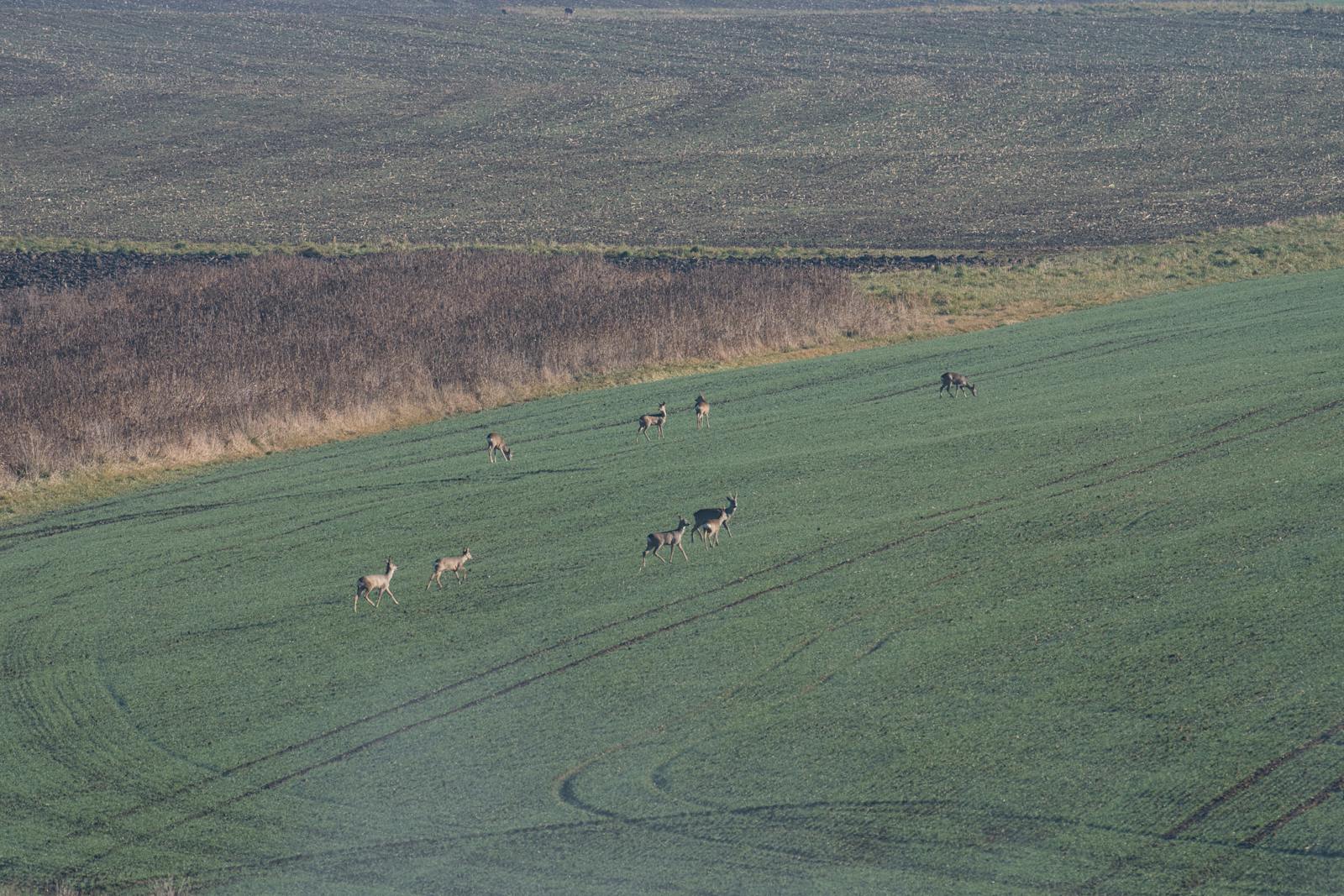
✅ Helps manage wildlife populations (especially deer browsing crops)
✅ Hunters often improve land (food plots, trail maintenance, reporting issues)
✅ Trusted hunters provide extra eyes on your property
✅ Quick to set up—can start earning this season
✅ Scalable—lease 10 acres or 1,000 acres
Cons: ❌ Seasonal income (typically one payment per year)
❌ Requires vetting hunters to find respectful, responsible partners
❌ Potential liability concerns (mitigated with insurance and proper agreements)
❌ Need to establish and enforce property rules
❌ Income varies with wildlife populations and habitat quality
Best For
✅ Properties with 20+ acres of huntable land
✅ Land with deer, turkey, waterfowl, or other game species
✅ Rural properties away from dense development
✅ Landowners who want immediate income with minimal investment
✅ Properties where crops are experiencing wildlife damage
Get Started with Hunting Leases - Create Your Free HuntLease.co Listing
Option 2: Solar Leases
What It Is
A solar lease allows an energy company to install solar panels on your land. You lease the land to them (typically for 20-40 years) and receive annual payments while they generate and sell electricity.
How It Works
The Basic Model:
- Solar developer identifies your land as suitable
- You negotiate lease terms and rates
- Developer handles all permits, installation, and maintenance
- You receive annual lease payments (often escalating over time)
- At end of lease, panels are removed and land restored
Developer Requirements:
- Flat or gently rolling terrain
- Minimal shading from trees or structures
- Proximity to electrical transmission lines (within 1-2 miles)
- Typically need 10+ acres minimum (100+ acres preferred)
- Good solar exposure (southern states often preferred but not required)
Income Potential
Typical rates: $500-$2,000 per acre per year
- Lower-tier markets: $500-$800/acre/year
- Mid-tier markets: $800-$1,200/acre/year
- Premium markets: $1,200-$2,000+/acre/year
Factors affecting rates:
- Proximity to transmission infrastructure
- Local electricity demand and pricing
- State renewable energy incentives
- Property size and configuration
- Land quality and preparation needed
Real examples:
- 50 acres in North Carolina: $50,000/year ($1,000/acre)
- 200 acres in Ohio: $120,000/year ($600/acre)
- 30 acres in New Jersey: $45,000/year ($1,500/acre)
Startup Costs
Zero upfront cost to landowner
The solar developer handles:
- All equipment and installation costs
- Permitting and regulatory compliance
- Grid connection infrastructure
- Ongoing maintenance and insurance
Your only "cost" is the opportunity cost of not using that land for other purposes during the lease term.
Time Commitment
Initial setup: 20-40 hours
- Researching and contacting solar developers
- Negotiating lease terms
- Environmental and land surveys
- Legal review of agreements
Ongoing: 1-2 hours per year
- Collecting lease payments
- Occasional property inspections
- Annual financial reporting
Effort level: VERY LOW ⭐☆☆☆☆
Pros and Cons
Pros: ✅ Highest income per acre of any alternative option
✅ Completely passive income—developer does everything
✅ Zero startup investment from landowner
✅ Long-term guaranteed income (20-40 year leases)
✅ Often includes escalating payments (2-3% annual increases)
✅ Property taxes may be paid by developer
✅ No equipment, maintenance, or labor needed from you
✅ Environmentally beneficial (clean energy production)
Cons: ❌ Very specific location requirements (not all properties qualify)
❌ Long-term commitment removes land from other uses
❌ Can take 1-3 years from initial contact to first payment
❌ May affect future land sale value (positively or negatively)
❌ Neighbors may object to visual impact
❌ Land must be relatively flat and unobstructed
❌ Need significant acreage (usually 20+ acres minimum)
Best For
✅ Large, flat properties (50+ acres ideal)
✅ Land within 1-2 miles of power transmission lines
✅ Properties in states with renewable energy incentives
✅ Landowners wanting long-term, hands-off passive income
✅ Land with poor agricultural potential
✅ Properties in suburban growth areas with high electricity demand
How to Get Started
- Check if your property qualifies:
- Use Google Earth to identify transmission lines near your property
- Verify you have at least 20 acres of relatively flat, unobstructed land
- Research if solar development is active in your county
- Contact solar developers:
- Search for "solar land lease [your state]"
- Contact 3-5 developers for preliminary evaluation
- National companies include: NextEra Energy, Cypress Creek Renewables, Pine Gate Renewables
- Get your land evaluated:
- Most developers will do free preliminary assessments
- They'll review satellite imagery and land characteristics
- If promising, they'll conduct on-site evaluation
- Negotiate lease terms:
- Review offers from multiple developers
- Hire an attorney experienced in solar leases
- Key terms: annual payment rate, escalation clause, lease term, decommissioning guarantee
Option 3: Farm Stays and Agritourism
What It Is
Agritourism involves welcoming visitors to your property for recreational, educational, or lodging experiences. This can range from simple farm tours to full-service cabin rentals.
How It Works
Common Agritourism Models:
Farm Stays: Rent out a cabin, cottage, or room (like Airbnb but on a farm) U-Pick Operations: Visitors pay to harvest their own produce Farm Tours and Education: Charge for educational experiences Event Hosting: Weddings, corporate retreats, photography sessions Recreational Activities: Fishing ponds, corn mazes, pumpkin patches, farm-to-table dinners
Income Potential
Highly variable based on offering and effort:
Farm Stay Lodging:
- $100-$300 per night
- 50-200 nights booked per year
- Potential: $5,000-$60,000/year per cabin
U-Pick Operations:
- Fruit: $1-$3 per pound picked
- Vegetables: $0.50-$2 per pound
- Flowers: $15-$40 per bouquet
- Potential: $5,000-$30,000/season (depends on acreage and crop)
Event Hosting:
- Weddings: $2,000-$10,000 per event
- Corporate events: $500-$3,000 per event
- Photography sessions: $100-$500 per session
- Potential: $10,000-$100,000/year (if pursuing actively)
Startup Costs
Significant investment required:
Farm Stay Lodging:
- Renovate existing structure: $10,000-$50,000
- Build new cabin: $50,000-$150,000
- Furnishings and amenities: $5,000-$15,000
- Initial total: $15,000-$165,000
U-Pick Operations:
- Crop establishment: $2,000-$10,000
- Signage and parking area: $1,000-$5,000
- Tools and containers: $500-$2,000
- Website and marketing: $1,000-$3,000
- Initial total: $4,500-$20,000
Event Hosting:
- Venue preparation: $5,000-$50,000
- Bathroom facilities: $5,000-$30,000
- Parking and roads: $2,000-$15,000
- Tables, chairs, equipment: $3,000-$10,000
- Initial total: $15,000-$105,000
Time Commitment
Significant active management required:
Farm Stay Lodging:
- Cleaning between guests: 3-4 hours per turnover
- Guest communication and booking management: 5-10 hours/week
- Property maintenance: 5-10 hours/week
- Effort level: MEDIUM-HIGH ⭐⭐⭐⭐☆
U-Pick Operations:
- Crop management: 10-20 hours/week during season
- Open for visitors: 20-40 hours/week
- Marketing and social media: 3-5 hours/week
- Effort level: HIGH ⭐⭐⭐⭐⭐
Event Hosting:
- Communication with clients: 5-15 hours per event
- Setup and breakdown: 10-20 hours per event
- Property preparation: Variable
- Effort level: MEDIUM-HIGH ⭐⭐⭐⭐☆
Pros and Cons
Pros: ✅ Very high income potential per acre used
✅ Personal satisfaction from hospitality and education
✅ Builds community connections
✅ Can be combined with other land uses
✅ Multiple revenue streams from one property
✅ Growing market demand (people seeking rural experiences)
✅ Can leverage existing structures (barns, houses)
Cons: ❌ High startup investment required
❌ Very hands-on and time-intensive
❌ Dealing with the public requires patience and people skills
❌ Liability exposure (need significant insurance)
❌ Regulatory requirements (permits, health codes, zoning)
❌ Seasonal in many regions
❌ Marketing and online presence required
❌ Privacy concerns with guests on property
Best For
✅ Properties near population centers (within 1-2 hour drive)
✅ Scenic or unique locations
✅ Landowners who enjoy hospitality and people interaction
✅ Properties with existing structures that can be renovated
✅ Owners willing to be actively involved in operations
✅ Land that can accommodate parking and visitors
Option 4: Sustainable Timber Management
What It Is
Timber management involves selectively harvesting trees from forested land, creating ongoing income while maintaining a healthy forest ecosystem.
How It Works
The Basic Model:
- Hire a consulting forester to evaluate your woodland
- Develop a forest management plan
- Selectively harvest mature trees (every 10-20 years)
- Replant or allow natural regeneration
- Maintain forest health between harvests
Approaches:
- Selective cutting: Remove only mature, high-value trees
- Thinning: Remove smaller trees to let remaining trees grow larger
- Clear-cutting: Remove all trees in sections (controversial but sometimes appropriate)
- Sustainable management: Balance harvest with regeneration
Income Potential
Highly variable and periodic:
One-time harvest (mature forest):
- Hardwood timber: $1,000-$5,000+ per acre (one-time)
- Pine timber: $500-$2,000 per acre (one-time)
- Premium species (walnut, cherry): $5,000-$15,000+ per acre
Ongoing management (per harvest cycle):
- Selective harvest every 10-15 years: $500-$2,000 per acre per harvest
- Sustainable yield approach: $50-$200 per acre per year (averaged)
Real examples:
- 50 acres mature hardwood in Tennessee: $75,000 one-time harvest
- 100 acres managed pine in Georgia: $120,000 harvest after 25 years
- 200 acres selective cutting in Pennsylvania: $150,000 harvest (targeting high-value trees only)
Startup Costs
Moderate investment for proper management:
- Consulting forester (forest management plan): $500-$2,000
- Boundary survey/marking: $1,000-$3,000
- Reforestation (if needed): $200-$600 per acre
- Trail/road improvements for logging access: $2,000-$10,000
- Total: $3,700-$15,600
Note: In most cases, timber sale proceeds far exceed these costs, so they're covered by first harvest.
Time Commitment
Low ongoing commitment:
Initial setup: 20-30 hours
- Finding and working with consulting forester
- Developing management plan
- Soliciting bids from timber buyers
During harvest: 10-20 hours
- Overseeing logging operations
- Ensuring contract terms are followed
Between harvests: 2-5 hours per year
- Annual forest walks
- Monitoring health and growth
- Trail maintenance
Effort level: LOW-MEDIUM ⭐⭐☆☆☆
Pros and Cons
Pros: ✅ Substantial income potential from mature timber
✅ Low ongoing time commitment
✅ Can be combined with hunting leases (enhanced habitat)
✅ Environmental benefits when done sustainably
✅ Property remains natural and beautiful
✅ Long-term asset appreciation (trees grow in value)
✅ Tax advantages (timber is often taxed as capital gains)
✅ Creates wildlife habitat diversity
Cons: ❌ Income is periodic, not annual (every 10-25 years typically)
❌ Requires patience—trees grow slowly
❌ Market prices fluctuate significantly
❌ Need significant acreage (20+ acres minimum)
❌ Logging operations temporarily impact land
❌ Must find reputable timber buyers and foresters
❌ Requires existing forest—can't start from scratch quickly
Best For
✅ Properties with 20+ acres of existing forested land
✅ Landowners with long-term outlook (10+ years)
✅ Properties with mature or near-mature timber
✅ Owners wanting to preserve natural character of land
✅ Land that's not suitable for agriculture
✅ Owners interested in conservation and sustainable management
How to Get Started
- Find a consulting forester:
- Search your state forestry association's directory
- Look for ACF (Association of Consulting Foresters) certified professionals
- Get recommendations from local extension office
- Get a forest management plan:
- Forester evaluates your timber type, age, quality
- Estimates current and future value
- Recommends harvest timing and methods
- Consider cost-share programs:
- USDA EQIP (Environmental Quality Incentives Program)
- State forestry grants and assistance
- Conservation programs that pay for management activities
- When ready to harvest:
- Work with forester to mark trees for cutting
- Solicit sealed bids from multiple timber buyers
- Use a written contract protecting your interests
Option 5: Grazing Leases
What It Is
A grazing lease allows farmers or ranchers to use your pasture or grassland for their livestock in exchange for payment.
How It Works
The Basic Model:
- You maintain fenced pasture/grassland
- Rancher brings their cattle, horses, sheep, or goats
- Rancher pays monthly or per-head fees
- Rancher typically maintains fences and water
- You collect income without raising animals yourself
Common Structures:
- Per-head, per-month: Charge per animal per month (e.g., $30-$50 per cow/calf pair)
- Per-acre: Charge per acre per season or year (e.g., $20-$80 per acre annually)
- Seasonal: Grazing only during growing season, property available for other uses off-season
Income Potential
Varies significantly by region and forage quality:
Per-Acre Rates:
- Basic pasture: $10-$30 per acre/year
- Good quality pasture: $30-$50 per acre/year
- Premium irrigated pasture: $50-$100+ per acre/year
Per-Head Rates:
- Cattle: $25-$50 per animal unit per month
- Horses: $100-$300 per horse per month (if providing stalls/care)
- Sheep/goats: $10-$25 per head per month
Real examples:
- 50 acres good pasture in Missouri: $1,500-$2,000/year
- 100 acres in Montana: $2,000-$4,000/year
- 25 acres horse boarding in Virginia: $6,000-$9,000/year
Startup Costs
Minimal if infrastructure exists:
- Fencing (if needed/repairs): $2,000-$10,000
- Water source (trough, pond access): $500-$3,000
- Gates and cattle guards: $500-$2,000
- Total: $0-$15,000 (depends on current condition)
Many grazing leases require the rancher to maintain fences and water, reducing landowner costs.
Time Commitment
Very low ongoing commitment:
Initial setup: 10-20 hours
- Finding a reputable rancher
- Negotiating lease terms
- Property preparation
Ongoing: 2-5 hours per month
- Checking fences and infrastructure
- Communication with lessee
- Collecting payments
Effort level: LOW ⭐⭐☆☆☆
Pros and Cons
Pros: ✅ Very low time commitment
✅ Minimal startup investment if fencing exists
✅ Livestock maintain pasture (natural mowing)
✅ Can improve soil health with rotational grazing
✅ Flexible lease terms (seasonal or year-round)
✅ Can be combined with hunting leases
✅ Simple, straightforward arrangement
Cons: ❌ Lower income per acre than most other options
❌ Requires existing pasture or grassland
❌ Fencing must be maintained
❌ Potential liability for livestock escapes or injuries
❌ Income can fluctuate with hay/feed prices
❌ Need adequate acreage (typically 10+ acres minimum)
❌ Finding reliable, trustworthy ranchers can take time
Best For
✅ Properties with existing pasture or cleared land
✅ Land between 10-200 acres
✅ Properties with good fencing already in place
✅ Landowners wanting hands-off income
✅ Areas with active ranching communities
✅ Land that's not suitable for row crops
Comparing the Five Options: Which Is Right for You?
Here's a comprehensive comparison to help you choose:
By Income Potential (per acre per year)
- Solar Leases: $500-$2,000/acre (highest)
- Farm Stays/Agritourism: $100-$1,000/acre (variable, high effort)
- Timber: $50-$200/acre (averaged over time, periodic)
- Grazing Leases: $10-$100/acre
- Hunting Leases: $10-$50/acre (lowest cost to start)
By Startup Cost
- Hunting Leases: $0-$1,000 (lowest)
- Solar Leases: $0 (developer pays)
- Grazing Leases: $0-$15,000
- Timber: $3,700-$15,600
- Agritourism: $15,000-$165,000 (highest)
By Time Commitment
- Solar Leases: Virtually zero (most passive)
- Hunting Leases: Very low (2-5 hours/season)
- Timber: Low (mostly periodic)
- Grazing Leases: Low (few hours/month)
- Agritourism: High (ongoing active management)
By Flexibility (Can Stop Easily)
- Hunting Leases: Very flexible (seasonal contracts)
- Grazing Leases: Flexible (annual or seasonal)
- Timber: Moderate (can stop harvesting anytime)
- Agritourism: Moderate (can cease operations)
- Solar Leases: Not flexible (20-40 year commitment)
Can You Combine Multiple Income Streams?
Absolutely—and you should consider it!
Many landowners successfully layer multiple income sources from the same property. Here are effective combinations:
Hunting Leases + Timber Management
- Selective logging creates edge habitat that benefits wildlife
- Hunters appreciate diverse forest structure
- Both are low-effort and complementary
- Combined income: $20-$60/acre
Hunting Leases + Grazing
- Livestock in fields, hunting in woodlands
- Often different seasons (graze spring-fall, hunt fall-winter)
- Both low-maintenance
- Combined income: $20-$75/acre
Solar + Hunting (on large properties)
- Solar on flattest portions, hunting on remaining acreage
- Some solar farms allow hunting in perimeter areas
- Check solar lease terms for restrictions
- Combined income: Varies by split
Agritourism + Hunting (carefully)
- Hunting in off-season or distant sections
- Clear boundaries and safety protocols required
- Farm stay guests may enjoy hunting packages
- Requires careful management
Why Hunting Leases Stand Out
While all five options have merit, hunting leases offer a unique combination of advantages:
✅ Zero to minimal startup cost - Start earning immediately
✅ No infrastructure required - Use raw land as-is
✅ Quick to implement - Can launch this season
✅ Low time commitment - Hours, not days or weeks
✅ Flexible terms - Seasonal agreements, easy to modify
✅ Combines with everything - Doesn't preclude other uses
✅ Benefits your property - Wildlife management and extra oversight
✅ Scales to any size - Works for 20 acres or 2,000
For most landowners, hunting leases are the ideal "first alternative income stream." They prove the concept of earning from your land without major investment or commitment. Once you're generating hunting lease income, you can evaluate whether to pursue other options.
Ready to Start? Get Your Free Hunting Lease Price Estimate
Getting Started: Your Action Plan
Ready to start generating alternative income from your land? Here's your step-by-step plan:
Step 1: Evaluate Your Land (This Week)
Walk your property with fresh eyes, asking:
- What natural resources exist? (Timber, wildlife, pasture, solar potential)
- What's currently unused or underutilized?
- What infrastructure exists? (Fencing, buildings, roads, utilities)
- What's the highest and best use for different sections?
Step 2: Research Your Local Market (This Week)
- Search online for hunting lease prices in your area
- Contact solar developers if your property might qualify
- Visit agritourism operations nearby to see what works
- Talk to neighbors about what they're doing
Step 3: Start with Hunting Leases (This Month)
For most landowners, this is the logical first step:
- Calculate your property's potential lease value using HuntLease.co's pricing calculator
- Create a listing on HuntLease.co (free to list)
- Draft a lease agreement using our template
- Start connecting with hunters for this season
Create Your Free HuntLease.co Listing Now
Step 4: Explore Complementary Options (Next 3-6 Months)
Once your hunting lease is generating income:
- Contact solar developers if your property might qualify
- Get a timber evaluation if you have forested land
- Research agritourism regulations in your area
- Consider grazing leases for open pasture
Step 5: Build Your Land Income Portfolio (Ongoing)
As you gain experience and confidence:
- Add second income stream where compatible
- Reinvest some income into property improvements
- Optimize your strategies based on what works
- Consider expanding or acquiring additional property
Tax Considerations for Alternative Income
Different income streams have different tax implications. Consult with a tax professional, but here's a general overview:
Hunting Leases:
- Typically treated as rental income
- Report on Schedule E
- Can deduct related expenses (insurance, marketing, etc.)
Solar Leases:
- Rental income on Schedule E
- May be considered business income in some cases
- Substantial annual income may require quarterly estimated payments
Agritourism:
- Usually business income (Schedule C)
- Can deduct business expenses
- May be subject to self-employment tax
- Potential for additional deductions (vehicle, home office, etc.)
Timber Sales:
- Often qualifies for capital gains treatment (lower tax rate)
- Special IRS rules under Section 631
- Consult a forester or CPA familiar with timber taxation
Grazing Leases:
- Rental income on Schedule E
- Simple reporting, few complications
Conclusion: Your Land Is an Underutilized Asset
If you're like most landowners, you're sitting on an asset that's earning far less than its potential. Whether it's 10 acres or 1,000, your property can generate meaningful income through one or more of these proven strategies.
The best approach?
- Start with hunting leases - Quick, low-cost, low-effort entry into alternative income
- Evaluate other options - See what else might fit your property and goals
- Layer income streams - Combine compatible uses for maximum return
- Reinvest and optimize - Use early income to fund improvements and expand
Your land isn't just where you live or farm—it's a financial asset with multiple revenue streams waiting to be tapped.
The landowners who will thrive in 2026 and beyond are those who think creatively about their property, diversify their income, and take action on opportunities.
Ready to start earning from your land? Begin with the simplest, fastest option: hunting leases.
[FINAL CTA: "Calculate Your Hunting Lease Value - Free Price Estimate"]
[SECONDARY CTA: "Create Your Free HuntLease.co Listing Today"]
Frequently Asked Questions
Q: Can I really make meaningful income from alternative uses, or is this just pocket change?
A: It depends on your expectations and acreage. For many landowners, alternative income covers their property taxes and insurance—turning a cost into break-even. For others with larger properties or premium options like solar leases, we're talking about $10,000-$100,000+ annually. Even "modest" hunting lease income of $1,500-$3,000/year is meaningful when it requires minimal effort and investment.
Q: Do I need to choose just one income stream?
A: No! Many of these options are complementary. Hunting leases and timber management work great together. Grazing and hunting can coexist. The key is ensuring activities don't conflict and you're not overextending yourself with time commitments.
Q: What if I live out of state from my land?
A: Hunting leases, solar leases, grazing leases, and timber management are all excellent for absentee landowners. They require minimal presence and can be managed remotely. Agritourism requires active, on-site involvement and is much harder for absentee owners.
Q: Will alternative income affect my agricultural tax exemption?
A: This varies significantly by state. Some states consider hunting leases and grazing compatible with ag exemptions. Others may not. Solar leases typically do affect ag exemptions. Consult your tax advisor or state agricultural extension office about your specific situation.
Q: How do I avoid scams or bad actors when leasing my land?
A: Always use written agreements, verify identities, collect deposits or full payment upfront, check references, and meet in person when possible. For hunting leases, platforms like HuntLease.co help by pre-screening hunters and facilitating professional agreements. For solar, only work with established developers with verifiable project histories.
Q: What's the single best alternative income option for beginners?
A: Hunting leases. They require virtually no startup capital, minimal time commitment, can be launched quickly, and don't preclude other uses of your land. They're the perfect "prove it" option to demonstrate that your land can generate income beyond traditional uses.
Related Articles:
- "How Much Can You Charge for a Hunting Lease? (A Price Breakdown)"
- "Why a Hunting Lease is a 'Win-Win' for Farmers"
- "How to Vet Hunters and Build a Great Landowner-Hunter Relationship"
- "Simple Land Improvements That Can Double Your Lease Value"
Disclaimer: This article provides general information about alternative land income opportunities and should not be considered financial, legal, or tax advice. Income potential figures are estimates based on typical market conditions and may vary significantly by location, property characteristics, and market conditions. Always consult with appropriate professionals (attorneys, CPAs, financial advisors) before making decisions about land use and income generation.